Showing posts with label Black Britain. Show all posts

Thursday, October 21, 2010

Making a Difference - Experiences of a Black British Serviceman

This is Allan Wilmot's story of serving in the Second World War. Allan was born in Kingston, Jamaica, in 1925 and served in the Royal Navy and the RAF.

There was no military tradition in my family. I enlisted because of patriotism and adventure. The West Indies gave full support to the mother country, Great Britain, in her conflict with Germany. My service began in June 1941. I served in the Royal Navy as an Ordinary Seaman until January 1944 when I was transferred to the Marine Section of the RAF. I was stationed in Kingston, England, Scotland, Northern Ireland and South Wales, and was awarded four medals: 1939 — 45 Star, Atlantic Star, Defence Medal and War Medal.

While I was in the Royal Navy we swept shipping channels for mines and suspected objects, as well as escorting convoys from the east coast of America up to the Panama Canal. We also searched for survivors from torpedoed ships.

In the RAF my unit picked up aircrews shot down or ditched at sea. They could be any nationality. For example, we saw some airmen ditched in the Channel. Full-speed ahead, we went to pick them up. They turned out to be German airmen, shot down. Anyway, being on the humanitarian side we decided to pick them up and continued to pick up the other British airmen. In the boat, they all sat looking at each other. I know what was going through their minds — 'Well, we are very happy to still be alive and picked up by a British rescue ship.'

We also laid flare paths for the flying boats to land or take off at night and transported aircrews and maintenance crews to planes. Our other jobs included refuelling, re-loading bombs and towing sea-planes to dry docks.

Being black did make a difference in World War Two, although I treated each person as an individual, according to the initial approach. I know for a fact that Black American servicemen where confined to non-combatant units until late 1944 when the whole scene changed — all the black fighting units were suddenly sent over to fight in Italy and the Middle East to invade enemy-held territories. The black units were led by white American officers, until orders came from Washington that racial discrimination in the American armed forces should be discontinued. Then experienced black servicemen got the opportunity to move up the promotion process to commanding positions.

The British scene was different — there was no official racial discrimination in the services, but seniority promotion for a black serviceman was rare, even though you were qualified to do the job. Excuses for non-promotion were always there, so you were simply allowed to carry on in the ranks, regardless of your ability. They didn't want black personnel in charge of white servicemen.

But we were treated very well by white civilians because they were aware that you had left your safe country to face danger and help them in their time of need. And white British servicemen, in my case, were fine. In the navy, on a small ship, you have to live close, so you automatically become a close unit - whether afloat or ashore, any difficulties that arise are quickly sorted out. In the RAF, again when on air-sea rescue duties, you are together as a crew. Most of the time, I was the only black, so no problem, but when I was on other duties and had to mix, there were some problems — mostly caused by stereotyping. People would say things like 'Because you're black you don't need to wash' and 'Where did you learn to speak English, if you live in trees?' At first I took offence, but after deep consideration I came to the conclusion that it was best for me to try and re-educate my colleagues, which I did.

I did socialise and went on quite a few dates with white girls — it was a novelty at the time. Some of my black brothers got married in the process. This caused frictions with white families, but I think it's natural. They pictured their loved daughter falling in love with a black man, and maybe eventually going abroad to live in the jungle and never seen again. That is what they immediately saw. With the white servicemen it was sheer jealousy — 'Why him and not me?' was the cry. 'What has he got that I ain't got?'

I got along fine with the white Commonwealth personnel because apparently they had been warned not to compare West Indians with their native population. A few did step out of line, but were dealt with accordingly. But I didn't get along with white American GIs. They were reluctant to accept the fact that the British black servicemen were a different race in social outlook. Many of the white American GIs were from the southern states of America and, although they were in Europe (a very different social scene), they couldn't face the changes that took place. So we had open wars, especially in dance halls and various places of entertainment, with the local whites as back-up on our side.

The black American GIs were a different story. We got along very well indeed - we British black servicemen were their protectors. At times, they were attacked by groups of white GIs, especially if they were in the company of white girls. If they attempted to defend themselves against the white GIs, police were always at hand to arrest the black ones for the stockade, so we would go to their rescue and try to prevent them being arrested. Because the US GI police had no jurisdiction over British servicemen, we could defend them (and ourselves) until the British police arrived on the scene, along with the ambulance for the wounded.

I was not treated equally regards pay and promotions, etc, but I never protested. I was not involved with politics before I enlisted and I wasn't politically active during the war. My service changed my outlook, though. I was exposed to things that I only used to read about, like racism in the USA and other parts of the world. Since then I have taken part in protests as a veteran. I've been through the various war museums and libraries and discovered that most of the black countries that participated in the last world war were left out of the history books, as if we didn't exist. I support the West Indian Ex-servicemen Association, formed for the welfare of veterans and for collective recognition.

I would also say that military service had some benefits. I travelled extensively and saw things for myself and was able to form my own opinion of worldwide issues.

I returned home to Jamaica after the war in November 1946, but they weren't expecting us. No arrangements had been made by the government of Jamaica or the British military for our return. Then they got some form of rehabilitation going, but I was frustrated and returned to England, where I thought the prospects were better because they were in the process of rebuilding the country.


'WW2 People's War is an online archive of wartime memories contributed by members of the public and gathered by the BBC. The archive can be found at bbc.co.uk/ww2peopleswar'

Contributed by
    Annie Keane
Article ID:
    A1921196
Contributed on:
    27 October 2003

Thursday, October 14, 2010

People from the Caribbean supporting the war effort.

This is an interesting film to view for Black History Month.


BFIfilms | September 08, 2009

In this film, made during the Second World War by the Ministry of Information, a group of West Indians, led by Una Marson and Learie Constantine, assemble at Broadcasting House in London. They describe to listeners of a popular BBC radio series, 'Calling the West Indies', how people from the Caribbean are supporting the war effort. Constantine speaks about factory workers, and introduces some war-workers, including Ulric Cross, a bomber navigator from Trinidad. Cross tells of his work in the RAF and Carlton Fairweather introduces a film about lumbermen from British Honduras. The film ends with a dance in the BBC studio. (Stephen Bourne)

Saturday, October 9, 2010

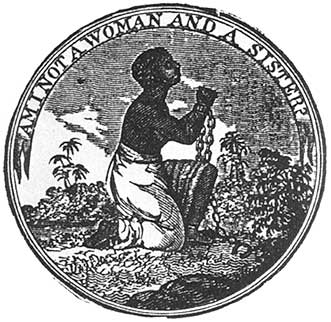
Slavery in Gloucestershire


Capturing Africans

The ownership of enslaved Africans was widespread in Gloucestershire. Headstones and historical document give us clues about these people's lives both before abolition and later as free men.

The ownership of enslaved Africans was still common in Gloucestershire during latter half of the 18th century. Baptism and burial records from the period using terms such as 'black slave' and 'a black negroe' have been found from Sherborne, Twyning, Stroud, Nympsfield, Tidenham and Littledean.

A gravestone inscription at Newent dated 7 October 1829 remembers Thomas Bloomsbury 'a native of Africa and for...55 years a faithful servant to the late Samuel Richardson Esq'.

And even at the turn of the century, records suggest that new servants – in some cases of a very young age - were still arriving from Africa. In Stroud on 7 May 1801 William Ellis, son of Qualquay Assedew, 'a Negro of Guinea', aged 12 years, was baptised.

However some were also acquiring skills and going into professions. A testimonial from Richard Raikes dated 5 July 1815 is supporting the application of John Hart, Writing Master, to the post of master at Bisley Blue Coat School.
Nevertheless, he still states: 'Unfortunately he is a Mulatto, a native of the West Indies...where so dark a complexion is not objected to, he would make a very valuable Schoolmaster...’
Mixed race relationships were also known. In Tetbury on 10 March 1827 Mary Ann Elding, 'about 40 years old', was buried. Records state that she was 'a travelling woman, the wife of a man of colour'.

Hardship

Many former slaves experienced hardship, some turning to crime. At Littledean on 24 March 1849 John Collins, a sailor, native of Antigua, aged 19, was sentenced to two months' hard labour for larceny. The goal register states that he 'left his home 10 years ago. Since then has been at sea in a merchant ship'.

Also at Littledean on 6 September 1867 'Henry Dyson, 20, Antigua; David Hunt, 25, W. Indies; Emmanuel Davidson, 22, W. Indies; all Men of Colour together with James Kear, 24, W. Indies, Mulatto; Mariners; jointly charged with stealing a wooden bottle and a quantity of bread & cheese & cider'. They were remanded overnight.

There are well-documented details of the lives, achievements and contributions made to British society by an array of people of African descent born, brought to or living in Britain from the early 19th century. They cover almost every field of endeavour, from politics and medicine to sport and entertainment.


Wednesday, October 6, 2010

Claudia Jones The Black Woman that created London Carnival

Trinidadian Claudia Jones was a civil rights worker, refugee and journalist. She set up the first ever weekly West Indian paper and in 1959 in response to the racist riots of 1958 created the first ever carnival. She also campaigned against racist immigration and for decent housing for immigrants from the Commonwealth who had been invited to Britain by Enoch Powell

Claudia Jones 1


Claudia Jones 2


Claudia Jones 3

Tuesday, October 5, 2010

from the HISTORY OF MARY PRINCE (excerpt)

THE

HISTORY OF MARY PRINCE,

A WEST INDIAN SLAVE.

RELATED BY HERSELF.


I am often much vexed, and I feel great sorrow when I hear some people in this country say, that the slaves do not need better usage, and do not want to be free.[16] They believe the foreign people,[17] who deceive them, and say slaves are happy. I say, Not so. How can slaves be happy when they have the halter round their neck and the [23]whip upon their back? and are disgraced and thought no more of than beasts?—and are separated from their mothers, and husbands, and children, and sisters, just as cattle are sold and separated? Is it happiness for a driver in the field to take down his wife or sister or child, and strip them, and whip them in such a disgraceful manner?—women that have had children exposed in the open field to shame! There is no modesty or decency shown by the owner to his slaves; men, women, and children are exposed alike.

Since I have been here I have often wondered how English people can go out into the West Indies and act in such a beastly manner. But when they go to the West Indies, they forget God and all feeling of shame, I think, since they can see and do such things. They tie up slaves like hogs—moor[18] them up like cattle, and they lick them, so as hogs, or cattle, or horses never were flogged;—and yet they come home and say, and make some good people believe, that slaves don't want to get out of slavery. But they put a cloak about the truth. It is not so. All slaves want to be free—to be free is very sweet. I will say the truth to English people who may read this history that my good friend, Miss S——, is now writing down for me. I have been a slave myself—I know what slaves feel—I can tell by myself what other slaves feel, and by what they have told me. The man that says slaves be quite happy in slavery—that they don't want to be free—that man is either ignorant or a lying person. I never heard a slave say so. I never heard a Buckra man say so, till I heard tell of it in England. Such people ought to be ashamed of themselves.


They can't do without slaves, they say. What's the reason they can't do without slaves as well as in England? No slaves here—no whips—no stocks—no punishment, except for wicked people. They hire servants in England; and if they don't like them, they send them away: they can't lick them. Let them work ever so hard in England, they are far better off than slaves. If they get a bad master, they give warning and go hire to another. They have their liberty. That's just what we want. We don't mind hard work, if we had proper treatment, and proper wages like English servants, and proper time given in the week to keep us from breaking the Sabbath. But they won't give it: they will have work—work—work, night and day, sick or well, till we are quite done up; and we must not speak up nor look amiss, however much we be abused. And then when we are quite done up, who cares for us, more than for a lame horse? This is slavery. I tell it, to let English people know the truth; and I hope they will never leave off to pray God, and call loud to the great King of England, till all the poor blacks be given free, and slavery done up for evermore.

Click to download  The History of Mary Prince by Mary Prince 
compliments of Project Guttenberg.

Sunday, October 3, 2010

The African British Experience

British Born Jamaican, Delroy Constantine-Simms
penned this article for "The Black Commentator"
in the March 1, 2007 issue.
Here's some of what he said. Read more for further insight into the "Black British" experience.


The majority of Africans in the Diaspora still suffer a lack of knowledge of self and our past and as a result suffer from cultural disinheritance. Historically this has lead to the internalisation and feelings of an inferiority complex, which are a direct result of becoming caricatures and an inferior subset of the human race in the body of Western thought.

Nowhere else in the world does Black History include the celebration of other cultures’ history that is not of African (and Caribbean) Origin. The British approach to Black History Month may be seen as inclusive to many, but to me it effectively challenges and undermines the reason why Black History Month was initially conceived. This urbanisation of Black History Month represents the watering down and marginalisation of our history and significant contribution to British society post and pre the Windrush.

In the USA, Black means anybody that is of African heritage; usually referring to Africans, African-Americans, Caribbean and African South Americans and those who identify with the Black experience but may be of dual heritage. No one else! Blacks in Britain have to accept footnote politics in that the definition of Black has to be explained on most public documents aimed at the so called target group. It's laughable, but a fact of British politics. It's no wonder African-Americans don't take us seriously as a community. It's no wonder they are confused when the come to UK Black History events only to find that the History being discussed has nothing to do with the African Diaspora experience. It's easy to blame the local authorities and national government, and mainstream for this state of affairs. But in reality, misguided Black politicians of the late 1970's with strong socialist tendencies created a situation where Black political and socio-historical contributions to the United Kingdom have been marginalised, recast and re-labelled as an urban contribution to the delight of organisations and policy makers who have no interest in accepting the term Black, let alone the contribution of Blacks in the United Kingdom before the arrival of the Windrush and after!