Showing posts with label Black History Month in Canada. Show all posts
Showing posts with label Black History Month in Canada. Show all posts
Tuesday, February 4, 2014
The Refugee, or, The narratives of fugitive slaves in Canada (1856)
Author: Drew, Benjamin, 1812-1903
Subject: Slavery; Slavery; Blacks; Esclavage; Esclavage; Noirs
Publisher: Boston : J.P. Jewett; Cleveland : Jewett, Proctor and Worthington
Language: English
Digitizing sponsor: University of Alberta Libraries
Book contributor: Canadiana.org
Collection: microfilm; additional_collections
Notes: Film/Fiche is presented as originally captured.


Saturday, November 27, 2010
Black Mother Black Daughter - Nova Scotia Women of Color
Black Mother Black Daughter
Rose Fortune was almost certainly the daughter of "Fortune — a free Negro", who came to Nova Scotia after the American War of Independence. He appears with his wife and a "child above ten" (probably Rose) in the muster roll of Loyalists at Annapolis in June 1784.
Rose earned her living as a trucker at Annapolis Royal. She carried baggage by a heavy wheelbarrow for the many passengers who travelled on the Saint John-Digby-Annapolis ferry. She also on occasion provided other assistance to travellers, such as helping them find better accommodation. Rose had two daughters and two grandsons. Family tradition states that one of her customers was Judge Haliburton, who came to Annapolis Royal to conduct court for the day. He relied on Rose to waken him the next morning and get him on board ship so that he would be in Digby in time to hold court there. (Noted author T.C. Haliburton was a judge of the Supreme Court, 1841-1856.)
Along with the carting and wake up services, Fortune established curfews and standards of behavior on the wharf. Her words of enforcement established her as the first police woman in Canada. She told stragglers to move along and to clear the streets before she turned in.
Although suffering from severe rheumatism in her later years, Rose continued to work until well into her seventies.
Black Mother Black Daughter
An NFB film by Claire Prieto & Sylvia Hamilton,
This is a wonderful film that chronicles the lives of Black Nova Scotian Women and their contributions to their communities socially, economically and spiritually as well as politically. We meet mothers and daughters and learn from them about some of their life experiences in their Nova Scotian communities.
Try this link (Click Here) if the embedded video is not available.

Rose Fortune was almost certainly the daughter of "Fortune — a free Negro", who came to Nova Scotia after the American War of Independence. He appears with his wife and a "child above ten" (probably Rose) in the muster roll of Loyalists at Annapolis in June 1784.
Rose earned her living as a trucker at Annapolis Royal. She carried baggage by a heavy wheelbarrow for the many passengers who travelled on the Saint John-Digby-Annapolis ferry. She also on occasion provided other assistance to travellers, such as helping them find better accommodation. Rose had two daughters and two grandsons. Family tradition states that one of her customers was Judge Haliburton, who came to Annapolis Royal to conduct court for the day. He relied on Rose to waken him the next morning and get him on board ship so that he would be in Digby in time to hold court there. (Noted author T.C. Haliburton was a judge of the Supreme Court, 1841-1856.)
Along with the carting and wake up services, Fortune established curfews and standards of behavior on the wharf. Her words of enforcement established her as the first police woman in Canada. She told stragglers to move along and to clear the streets before she turned in.
Although suffering from severe rheumatism in her later years, Rose continued to work until well into her seventies.
Black Mother Black Daughter
An NFB film by Claire Prieto & Sylvia Hamilton,
This is a wonderful film that chronicles the lives of Black Nova Scotian Women and their contributions to their communities socially, economically and spiritually as well as politically. We meet mothers and daughters and learn from them about some of their life experiences in their Nova Scotian communities.
Try this link (Click Here) if the embedded video is not available.
Friday, October 29, 2010
UK Black History Month (Canada)
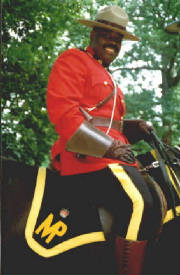
Canada has it's history linked to Britain.
Canadian black history should definitely
figure in the picture somewhere. Eh?
I'm including a short youtube video
on African-Canadian History
Thursday, September 30, 2010
Thursday, February 25, 2010
Seven Shades Of Pale - A glimpse of Black Nova Scotia in the seventies
Seven Shades Of Pale is a National Film Board of Canada presentation that takes us into the lives of rural Black Nova Scotians. We get a sense of what life was like in 1975 for these folks and they speak about what it was like before that as well. We get to meet the younger and the older generation
and learn something about their experiences in Nova Scotia. I'm sure you will find this video entertaing and educational.
I'm sorry this video is no longer available on youtube you can see a bit about it on the web site of The National Film Board of Canada (click to see)
and learn something about their experiences in Nova Scotia. I'm sure you will find this video entertaing and educational.
I'm sorry this video is no longer available on youtube you can see a bit about it on the web site of The National Film Board of Canada (click to see)
Monday, February 15, 2010
Black Settlers of Eastern Canada

THE Nova Scotia government has a website that highlights Hall and other Black Nova Scotians
to check it out click here.
Black History in Canada is hard to come by. Not because it didn't happen but because the stories are not told in the mainstream historical vehicules.
The history of Black people in PEI is well told by the;
The Black Islanders Co-operative.
The Black Islanders Co-operative’s intention is to share its information with the public. It does not vouch for the accuracy of the information. The research information is the genealogical summary of a research project undertake by the Black Islanders Co-operative. It was gathered through research and member contributions.
The Saint John, New Brunswick Connection
Black people were in the Province of New Brunswick even before its earliest settlements. They came as Indian captives, explorers, workers in the fur trade and early industries but the majority arrived after the American Revolutionary War both as free blacks and slaves.
The British had offered all blacks freedom if they fought on the side of the British - hundreds of them managed to escape from their owners and fought against the Americans. At the end of the war, many of them were shipped to Nova Scotia which at that time included what is now New Brunswick. Here they were given grants of land but they were half the size of the grants which were given to the white Loyalists and the grants were a fair distance away from any sizable town. One of those New Brunswick settlements was Willow Grove. It is approximately 16 miles from Saint John and originally there were about 500 people sent there. Life in a new country was very hard and it was especially difficult for people living so far from the main centre. The winters were long and bitter and there were many hills to transverse on a walk between Saint John and Willow Grove. But by standing together and hard work they survived and many of their descendants still live in Saint John today.
Measha Brueggergosman
A shining example of the of the contribution the descendants of these
early Black Canadian settlers of New Brunswick.
Measha Brueggergosman
Measha Brueggergosman (née Gosman) was born to Anne Eatmon and Sterling Gosman in Fredericton, New Brunswick, becoming at least the eighth generation of her family in Canada. At the time of the American War of Independence, African Americans were offered their freedom if they fought for the British, and many accepted, heading to Canada—especially the Maritime provinces.
Also see Buxton Settlement
Also see Buxton Settlement
Subscribe to:
Comments (Atom)