Showing posts with label Black History Month UK. Show all posts
Showing posts with label Black History Month UK. Show all posts
Wednesday, May 30, 2018


Friday, October 24, 2014
Colonel Oko Ofori - My story
For UK Black History Month you should really listen to these videos if you want an African POV of relations with the British in the 40s
(They promised jobs but they did not honor their promise)
Tuesday, October 7, 2014
Historic London Conference - First Voice: Dialogue with the Diaspora*

The presenters were historians and scholars and the descendants of Africans from the diaspora who distinguished themselves throughout the 20th century with their efforts to uplift and unite the peoples of Africa the world over.
I found the videos that follow on the youtube channel of Donovan Fontaine so I don't know if the speakers represent all who spoke at the conference or not. I do know, that everything he has shared with us is definitely worth watching and sharing. I only hope that all of these presentations will be available for many people to see for a long time to come(ie. archived), so that this info can continue to be of use to coming generations. Props to Mr. Fontaine.

Mayor of London Ken Livingstone
Dr Abdul Alkalimat Chapter 2.
Dr Hakim Adi Chapter 3
Dr. David Graham Dubois Chapter 4
Dr Gorkeh Gamal Nkrumah Chapter 5
Paul Robeson Jr, Chapter 6
Saturday, October 4, 2014
Marika Sherwood, Uncovering The History of Africans in Britain
 |
| Marika Sherwood with Ghanaian friend Zan Akologo |
An interview of Ms Sherwood on "Africa Past and Present" is what alerted me to her work. I hope you'll listen to it and continue to find out more on the history of Africans in Britain.
(Sorry the above link seems to be no longer active)
Wednesday, October 9, 2013
Paul Robeson in "Song of Freedom" 1936
Song of Freedom, a 1936 British film starring Paul Robeson, may best represent the opportunity Robeson was looking for to "give a true picture of many aspects of the life of the coloured man in the West. Hitherto on the screen, he has been characterized or presented only as a comedy character. This film shows him as a real man." Robeson was also given final cut approval on the film, an unprecedented option at the time for an actor of any race.
Tuesday, September 17, 2013
October is Black History Month in the UK
"The first UK Black History event was held in 1987. Set up by Akyaaba Addai Sebbo, who worked with Ken Livingstone at the Greater London Council, its aim was to mark the contributions of black people throughout history. Black History Month now runs throughout the month of October. As there has long been concern about the experience of black children in the UK, October - as the beginning of the academic year - felt like a good time to instill pride and a sense of identity for these children."
UK BHM 2013
If we African Americans and Canadians put some effort into studying and
sharing the info we find then African Diasporan History will advance that much
further. I hope to see some sharing going on over the pond this year
in October and next year in February. It would be really something if we
could keep it going from the beginning of October through February.
Africans in Britain
From the late Middle Ages, as Europeans began to make direct contact with Africa, the number of Africans and people of African descent in Britain began to increase. The most important cause of these migrations was probably the slave trade. British involvement in the trade began in the 16th century and had reached huge proportions by the 18th. Over a period of 400 years, Europeans transported many millions of Africans to labour in their colonies in the Americas. These migrations created the Black
diaspora.

UK BHM 2013
If we African Americans and Canadians put some effort into studying and
sharing the info we find then African Diasporan History will advance that much
further. I hope to see some sharing going on over the pond this year
in October and next year in February. It would be really something if we
could keep it going from the beginning of October through February.
Africans in Britain
From the late Middle Ages, as Europeans began to make direct contact with Africa, the number of Africans and people of African descent in Britain began to increase. The most important cause of these migrations was probably the slave trade. British involvement in the trade began in the 16th century and had reached huge proportions by the 18th. Over a period of 400 years, Europeans transported many millions of Africans to labour in their colonies in the Americas. These migrations created the Black
diaspora.

This image, from the Gentleman's Magazine, shows Ayuba Suleiman Diallo (here called by the English version of his name, Job ben Solomon), the son of a Muslim imam from Gambia, and William Ansah Sessarakoo, a prince from Ghana. They were both tricked into slavery, but freed on account of their noble origins and education. Sessarakoo lived in England from 1749 to 1750.
Solomon travelled to England after spending time on a plantation in Maryland. He became something of a celebrity and was 'graciously received by nobility'. Dressed in an African gown, he was presented to the king and queen. After spending some time in England, he was taken back to Africa by the Royal African Company.
Gentleman's Magazine, June 1750, p. 273
Links
I could go on with the links but I believe you get the picture,
please share and discuss the info you find with family and friends and
feel free to come back with other info, comments are welcome.
Tuesday, October 2, 2012
UK Black History Month - Pro and Con
In The UK October is Black History Month, as elsewhere, the discussion of the value and the effects of Black History Month goes on. BHM has it's instigators and it's protractors. Where do you stand?
PRO
blackpresence.co.uk
PRO
blackpresence.co.uk
CON
 |
| by Chama Kapumpa |
Wednesday, September 19, 2012
Independence Day St. Kitts and Nevis September 19 (1983)
Carib Indians occupied the islands for hundreds of years before the British began settlement in 1623. The islands became an associated state of the UK with full internal autonomy in 1967. The island of Anguilla rebelled and was allowed to secede in 1971. Saint Kitts and Nevis achieved independence in 1983.

Saint. Kitts and Nevis Flag
divided diagonally from the lower hoist side by a broad black band bearing two white, five-pointed stars; the black band is edged in yellow; the upper triangle is green, the lower triangle is red; green signifies the island's fertility, red symbolizes the struggles of the people from slavery, yellow denotes year-round sunshine, and black represents the African heritage of the people; the white stars stand for the islands of Saint Kitts and Nevis, but can also express hope and liberty, or independence and optimism
Tuesday, October 4, 2011
Sunday, October 2, 2011
October is Black History Month in the UK
The African Princess:Sarah Forbes Bonetta
At the age of five, Sarah Forbes Bonetta Davies, born into a royal West African dynasty, was taken to England and presented to Queen Victoria as a "gift" from one royal family to another. A unique and admired figure in history, she spent her life between the British royal household and her homeland in Africa.

In his journal Captain Forbes gave an account of his mission with relation to Miss Bonetta.
"I have only to add a few particulars about my extraordinary present The African child". In a former portion of this journal I have mentioned the Okeadon war; one of the captives of this dreadful slave-hunt was this interesting girl.
It is usual to reserve the best born for the high behest of royalty and the immolation on the tombs of the diseased nobility. For one of these ends she had been detained at court for two years: proving, by her not having been sold to slave dealer, that she was of a good family.
"I have only to add a few particulars about my extraordinary present The African child". In a former portion of this journal I have mentioned the Okeadon war; one of the captives of this dreadful slave-hunt was this interesting girl.
It is usual to reserve the best born for the high behest of royalty and the immolation on the tombs of the diseased nobility. For one of these ends she had been detained at court for two years: proving, by her not having been sold to slave dealer, that she was of a good family.
So extraordinary a present would have been at least burden, had I not the conviction that, in consideration of the nature of the service I had performed, the government would consider her as the property of the crown.
To refuse, would have been to have signed her death warrant which, probably, would have been carried into execution forthwith. Immediately on arriving...
Of her own history she was only a confused idea. Her parents were decapitated; her brother and sisters she knows not what their fate might have been .
For her age supposed to be eight years. She is a perfect genius; she now speaks English well, and has a great talent for music. She has won the affections, with but few exceptions, of all who have known her, she is far in advance of any white child of her age, in aptness of learning, and strength of mind and affection."
For more features, accounts and info see bhm The Guide To Black History Month
To refuse, would have been to have signed her death warrant which, probably, would have been carried into execution forthwith. Immediately on arriving...
Of her own history she was only a confused idea. Her parents were decapitated; her brother and sisters she knows not what their fate might have been .
For her age supposed to be eight years. She is a perfect genius; she now speaks English well, and has a great talent for music. She has won the affections, with but few exceptions, of all who have known her, she is far in advance of any white child of her age, in aptness of learning, and strength of mind and affection."
For more features, accounts and info see bhm The Guide To Black History Month
Friday, October 29, 2010
UK Black History Month (Canada)
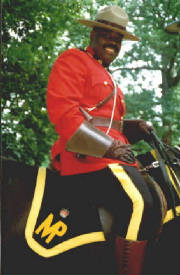
Canada has it's history linked to Britain.
Canadian black history should definitely
figure in the picture somewhere. Eh?
I'm including a short youtube video
on African-Canadian History
Sunday, October 24, 2010
The African Diaspora in Britain: A podcast
I really enjoy snooping around itunes for informative podcasts.
I found this episode which was published in October 2009.
It's about 30 minutes long and packed with information.
« Episode 32: Africa and the Indian OceanPodcast Featured on American Historical Association Blog »
Episode 33: The African Diaspora in Britain
Marika Sherwood (senior research fellow, Institute of Commonwealth Studies, London) on the history of the African diaspora in Britain. She discusses aspects of her 2007 book After Abolition: Britain and the Slave Trade Since 1807, the 1945 Pan Africanist Congress in Manchester, and Pan-African biographies. Sherwood concludes by noting the inadequate treatment of black history in the UK school curriculum.
I found this episode which was published in October 2009.
It's about 30 minutes long and packed with information.
« Episode 32: Africa and the Indian OceanPodcast Featured on American Historical Association Blog »
Episode 33: The African Diaspora in Britain
Marika Sherwood (senior research fellow, Institute of Commonwealth Studies, London) on the history of the African diaspora in Britain. She discusses aspects of her 2007 book After Abolition: Britain and the Slave Trade Since 1807, the 1945 Pan Africanist Congress in Manchester, and Pan-African biographies. Sherwood concludes by noting the inadequate treatment of black history in the UK school curriculum.
Thursday, October 21, 2010
Making a Difference - Experiences of a Black British Serviceman
This is Allan Wilmot's story of serving in the Second World War. Allan was born in Kingston, Jamaica, in 1925 and served in the Royal Navy and the RAF.
There was no military tradition in my family. I enlisted because of patriotism and adventure. The West Indies gave full support to the mother country, Great Britain, in her conflict with Germany. My service began in June 1941. I served in the Royal Navy as an Ordinary Seaman until January 1944 when I was transferred to the Marine Section of the RAF. I was stationed in Kingston, England, Scotland, Northern Ireland and South Wales, and was awarded four medals: 1939 — 45 Star, Atlantic Star, Defence Medal and War Medal.
While I was in the Royal Navy we swept shipping channels for mines and suspected objects, as well as escorting convoys from the east coast of America up to the Panama Canal. We also searched for survivors from torpedoed ships.
 In the RAF my unit picked up aircrews shot down or ditched at sea. They could be any nationality. For example, we saw some airmen ditched in the Channel. Full-speed ahead, we went to pick them up. They turned out to be German airmen, shot down. Anyway, being on the humanitarian side we decided to pick them up and continued to pick up the other British airmen. In the boat, they all sat looking at each other. I know what was going through their minds — 'Well, we are very happy to still be alive and picked up by a British rescue ship.'
We also laid flare paths for the flying boats to land or take off at night and transported aircrews and maintenance crews to planes. Our other jobs included refuelling, re-loading bombs and towing sea-planes to dry docks.
Being black did make a difference in World War Two, although I treated each person as an individual, according to the initial approach. I know for a fact that Black American servicemen where confined to non-combatant units until late 1944 when the whole scene changed — all the black fighting units were suddenly sent over to fight in Italy and the Middle East to invade enemy-held territories. The black units were led by white American officers, until orders came from Washington that racial discrimination in the American armed forces should be discontinued. Then experienced black servicemen got the opportunity to move up the promotion process to commanding positions.
The British scene was different — there was no official racial discrimination in the services, but seniority promotion for a black serviceman was rare, even though you were qualified to do the job. Excuses for non-promotion were always there, so you were simply allowed to carry on in the ranks, regardless of your ability. They didn't want black personnel in charge of white servicemen.
But we were treated very well by white civilians because they were aware that you had left your safe country to face danger and help them in their time of need. And white British servicemen, in my case, were fine. In the navy, on a small ship, you have to live close, so you automatically become a close unit - whether afloat or ashore, any difficulties that arise are quickly sorted out. In the RAF, again when on air-sea rescue duties, you are together as a crew. Most of the time, I was the only black, so no problem, but when I was on other duties and had to mix, there were some problems — mostly caused by stereotyping. People would say things like 'Because you're black you don't need to wash' and 'Where did you learn to speak English, if you live in trees?' At first I took offence, but after deep consideration I came to the conclusion that it was best for me to try and re-educate my colleagues, which I did.
I did socialise and went on quite a few dates with white girls — it was a novelty at the time. Some of my black brothers got married in the process. This caused frictions with white families, but I think it's natural. They pictured their loved daughter falling in love with a black man, and maybe eventually going abroad to live in the jungle and never seen again. That is what they immediately saw. With the white servicemen it was sheer jealousy — 'Why him and not me?' was the cry. 'What has he got that I ain't got?'
I got along fine with the white Commonwealth personnel because apparently they had been warned not to compare West Indians with their native population. A few did step out of line, but were dealt with accordingly. But I didn't get along with white American GIs. They were reluctant to accept the fact that the British black servicemen were a different race in social outlook. Many of the white American GIs were from the southern states of America and, although they were in Europe (a very different social scene), they couldn't face the changes that took place. So we had open wars, especially in dance halls and various places of entertainment, with the local whites as back-up on our side.
The black American GIs were a different story. We got along very well indeed - we British black servicemen were their protectors. At times, they were attacked by groups of white GIs, especially if they were in the company of white girls. If they attempted to defend themselves against the white GIs, police were always at hand to arrest the black ones for the stockade, so we would go to their rescue and try to prevent them being arrested. Because the US GI police had no jurisdiction over British servicemen, we could defend them (and ourselves) until the British police arrived on the scene, along with the ambulance for the wounded.
I was not treated equally regards pay and promotions, etc, but I never protested. I was not involved with politics before I enlisted and I wasn't politically active during the war. My service changed my outlook, though. I was exposed to things that I only used to read about, like racism in the USA and other parts of the world. Since then I have taken part in protests as a veteran. I've been through the various war museums and libraries and discovered that most of the black countries that participated in the last world war were left out of the history books, as if we didn't exist. I support the West Indian Ex-servicemen Association, formed for the welfare of veterans and for collective recognition.
I would also say that military service had some benefits. I travelled extensively and saw things for myself and was able to form my own opinion of worldwide issues.
I returned home to Jamaica after the war in November 1946, but they weren't expecting us. No arrangements had been made by the government of Jamaica or the British military for our return. Then they got some form of rehabilitation going, but I was frustrated and returned to England, where I thought the prospects were better because they were in the process of rebuilding the country.
'WW2 People's War is an online archive of wartime memories contributed by members of the public and gathered by the BBC. The archive can be found at bbc.co.uk/ww2peopleswar'
Contributed by
Annie Keane
Article ID:
A1921196
Contributed on:
27 October 2003
There was no military tradition in my family. I enlisted because of patriotism and adventure. The West Indies gave full support to the mother country, Great Britain, in her conflict with Germany. My service began in June 1941. I served in the Royal Navy as an Ordinary Seaman until January 1944 when I was transferred to the Marine Section of the RAF. I was stationed in Kingston, England, Scotland, Northern Ireland and South Wales, and was awarded four medals: 1939 — 45 Star, Atlantic Star, Defence Medal and War Medal.
While I was in the Royal Navy we swept shipping channels for mines and suspected objects, as well as escorting convoys from the east coast of America up to the Panama Canal. We also searched for survivors from torpedoed ships.

We also laid flare paths for the flying boats to land or take off at night and transported aircrews and maintenance crews to planes. Our other jobs included refuelling, re-loading bombs and towing sea-planes to dry docks.
Being black did make a difference in World War Two, although I treated each person as an individual, according to the initial approach. I know for a fact that Black American servicemen where confined to non-combatant units until late 1944 when the whole scene changed — all the black fighting units were suddenly sent over to fight in Italy and the Middle East to invade enemy-held territories. The black units were led by white American officers, until orders came from Washington that racial discrimination in the American armed forces should be discontinued. Then experienced black servicemen got the opportunity to move up the promotion process to commanding positions.
The British scene was different — there was no official racial discrimination in the services, but seniority promotion for a black serviceman was rare, even though you were qualified to do the job. Excuses for non-promotion were always there, so you were simply allowed to carry on in the ranks, regardless of your ability. They didn't want black personnel in charge of white servicemen.
But we were treated very well by white civilians because they were aware that you had left your safe country to face danger and help them in their time of need. And white British servicemen, in my case, were fine. In the navy, on a small ship, you have to live close, so you automatically become a close unit - whether afloat or ashore, any difficulties that arise are quickly sorted out. In the RAF, again when on air-sea rescue duties, you are together as a crew. Most of the time, I was the only black, so no problem, but when I was on other duties and had to mix, there were some problems — mostly caused by stereotyping. People would say things like 'Because you're black you don't need to wash' and 'Where did you learn to speak English, if you live in trees?' At first I took offence, but after deep consideration I came to the conclusion that it was best for me to try and re-educate my colleagues, which I did.
I did socialise and went on quite a few dates with white girls — it was a novelty at the time. Some of my black brothers got married in the process. This caused frictions with white families, but I think it's natural. They pictured their loved daughter falling in love with a black man, and maybe eventually going abroad to live in the jungle and never seen again. That is what they immediately saw. With the white servicemen it was sheer jealousy — 'Why him and not me?' was the cry. 'What has he got that I ain't got?'
I got along fine with the white Commonwealth personnel because apparently they had been warned not to compare West Indians with their native population. A few did step out of line, but were dealt with accordingly. But I didn't get along with white American GIs. They were reluctant to accept the fact that the British black servicemen were a different race in social outlook. Many of the white American GIs were from the southern states of America and, although they were in Europe (a very different social scene), they couldn't face the changes that took place. So we had open wars, especially in dance halls and various places of entertainment, with the local whites as back-up on our side.
The black American GIs were a different story. We got along very well indeed - we British black servicemen were their protectors. At times, they were attacked by groups of white GIs, especially if they were in the company of white girls. If they attempted to defend themselves against the white GIs, police were always at hand to arrest the black ones for the stockade, so we would go to their rescue and try to prevent them being arrested. Because the US GI police had no jurisdiction over British servicemen, we could defend them (and ourselves) until the British police arrived on the scene, along with the ambulance for the wounded.
I was not treated equally regards pay and promotions, etc, but I never protested. I was not involved with politics before I enlisted and I wasn't politically active during the war. My service changed my outlook, though. I was exposed to things that I only used to read about, like racism in the USA and other parts of the world. Since then I have taken part in protests as a veteran. I've been through the various war museums and libraries and discovered that most of the black countries that participated in the last world war were left out of the history books, as if we didn't exist. I support the West Indian Ex-servicemen Association, formed for the welfare of veterans and for collective recognition.
I would also say that military service had some benefits. I travelled extensively and saw things for myself and was able to form my own opinion of worldwide issues.
I returned home to Jamaica after the war in November 1946, but they weren't expecting us. No arrangements had been made by the government of Jamaica or the British military for our return. Then they got some form of rehabilitation going, but I was frustrated and returned to England, where I thought the prospects were better because they were in the process of rebuilding the country.
'WW2 People's War is an online archive of wartime memories contributed by members of the public and gathered by the BBC. The archive can be found at bbc.co.uk/ww2peopleswar'
Contributed by
Annie Keane
Article ID:
A1921196
Contributed on:
27 October 2003
The Origin of Black History Month in the UK
Linda Bellos introduced Black History Month to the UK in 1987, she was born to a white Jewish British mother and Nigerian father and grew up in London.
As a child she heard white people tell her mother that she had betrayed ‘our boys’ by marrying a black man after the sacrifices White people had made in 2nd World War.
Linda later discovered that her father had volunteered for the Merchant Navy to help the mother country.
She also discovered that during the 2nd World War 2.5 million Indian/Pakistani/Sri Lankan/Bangladeshi men and women where involved in the War efforts and 1.5 million during the 1st World War.
Linda Bellos, Part 1 of 3, Black History Month Opening Address
As a child she heard white people tell her mother that she had betrayed ‘our boys’ by marrying a black man after the sacrifices White people had made in 2nd World War.
Linda later discovered that her father had volunteered for the Merchant Navy to help the mother country.
She also discovered that during the 2nd World War 2.5 million Indian/Pakistani/Sri Lankan/Bangladeshi men and women where involved in the War efforts and 1.5 million during the 1st World War.
Linda Bellos, Part 1 of 3, Black History Month Opening Address
Part 2 of 3
Part 3 of 3
Monday, October 18, 2010

Sunday, October 17, 2010
Marcus Mosiah Garvey, Jr.

No account of Black History Month is complete
without mentioning Marcus Garvey.
Born Marcus Mosiah Garvey, Jr.
17 August 1887
St. Ann's Bay, Jamaica
Died 10 June 1940 (aged 52)
London, England
Occupation Publisher, Journalist
Known for Activism, National Hero of Jamaica
Religion Roman Catholic
Parents Marcus Mosiah Garvey, Sr.
Sarah Jane Richards
THE INFLUENCE OF MARCUS GARVEY PT. 1
THE INFLUENCE OF MARCUS GARVEY PT. 2
THE INFLUENCE OF MARCUS GARVEY PT. 3
THE INFLUENCE OF MARCUS GARVEY PT. 4
THE INFLUENCE OF MARCUS GARVEY PT. 5
Thursday, October 14, 2010
History of the British Empire
Time for a little break.
jetblakink | February 05, 2010
Queen Victoria, the monarchy, and the British Empire are built on theft, bloodshed and murder. The link between Great Britain, Africa, slavery, India, Afghanistan and many other ugly truths manifesting themselves in some form today, tends not to be widely taught in the UK. The result is that many people, even citizens of England live in absolute ignorance about how their country became a power in the world. However, this most excellent sketch by CBBC children TV show: Horrible Histories, episode 11, exposes the story for all and sundry.
jetblakink | February 05, 2010
Queen Victoria, the monarchy, and the British Empire are built on theft, bloodshed and murder. The link between Great Britain, Africa, slavery, India, Afghanistan and many other ugly truths manifesting themselves in some form today, tends not to be widely taught in the UK. The result is that many people, even citizens of England live in absolute ignorance about how their country became a power in the world. However, this most excellent sketch by CBBC children TV show: Horrible Histories, episode 11, exposes the story for all and sundry.
People from the Caribbean supporting the war effort.
This is an interesting film to view for Black History Month.
BFIfilms | September 08, 2009
In this film, made during the Second World War by the Ministry of Information, a group of West Indians, led by Una Marson and Learie Constantine, assemble at Broadcasting House in London. They describe to listeners of a popular BBC radio series, 'Calling the West Indies', how people from the Caribbean are supporting the war effort. Constantine speaks about factory workers, and introduces some war-workers, including Ulric Cross, a bomber navigator from Trinidad. Cross tells of his work in the RAF and Carlton Fairweather introduces a film about lumbermen from British Honduras. The film ends with a dance in the BBC studio. (Stephen Bourne)
BFIfilms | September 08, 2009
In this film, made during the Second World War by the Ministry of Information, a group of West Indians, led by Una Marson and Learie Constantine, assemble at Broadcasting House in London. They describe to listeners of a popular BBC radio series, 'Calling the West Indies', how people from the Caribbean are supporting the war effort. Constantine speaks about factory workers, and introduces some war-workers, including Ulric Cross, a bomber navigator from Trinidad. Cross tells of his work in the RAF and Carlton Fairweather introduces a film about lumbermen from British Honduras. The film ends with a dance in the BBC studio. (Stephen Bourne)
Tuesday, October 12, 2010
Black Britons ( Black History Month)
These videos have been designed as Lesson Starters - (key stage 3 for Teachers TV in English schools)
1 0f 4 - Black Britons
Britain's Black History 2 of 4 - Coffee Houses and the Slave "Trade"
Britain's Black History 3 of 4 - Gold
Britain's Black History 4 of 4 - The Obelisk
1 0f 4 - Black Britons
Britain's Black History 2 of 4 - Coffee Houses and the Slave "Trade"
Britain's Black History 3 of 4 - Gold
Britain's Black History 4 of 4 - The Obelisk
Subscribe to:
Posts (Atom)