Showing posts with label African American. Show all posts
Showing posts with label African American. Show all posts
Tuesday, November 6, 2018


Friday, April 6, 2012
The American Spring - Occupy Our Hood

Well, as our civil rights continue to be eroded, the rich continue to get richer, the foreclosures haven't slowed pace, the labor unions are under attack the prisons are still overflowing with African Americans, the wall is still under construction between Mexico and the US plus the "undocumented alien" problem is still with us, the cost of health and education is spiralinging out of reach, the war budget is as outrageous as ever, all the while Wall Street and the Banks are raking in the dough like never before and Americans are being turned against one another as much or more than ever, I don't believe these were the changes we had in mind. I also don't believe that we can leave it completely up to politicians and lobbyists to decide which direction it is that we are going to take. We had all hoped that Obama was going to lead us in bringing the changes we wanted but that is clearly not working out. It won't help if the other political party comes back into power either. In my mind at least, it's coming clear, that if we don't get involved directly, the changes we want will not be forthcoming. Things may not be as bad as they look on the surface because it all just might cause, those in America who feel in their hearts that the right thing has to be done by the people, to coalesce and realize the full potential of the 99%. Forget the Tea Party, let's assemble the 99% and form "The We Party"
Occupy Consciousness: The American Spring arrives
By Dr. Benjamin F. Chavis, Jr.
24 MARCH 2012
Tuesday, April 3, 2012
Spring is Coming To - Occupy The Hood
Back in November 2011 I saw an article in The Michigan Citizen regarding a challenge that was put to the youth of African descent to improve their world. Now as spring is coming into bloom the organization that made that challenge - OCCUPY THE HOOD (OTH) is also starting to show some buds. There are now chapters in 17 US cities coast to coast and north to south with more in the works. Their official web site seems to be a bit slow at the moment so rather than link to their mission statement, I'll just include it in this post. October and November saw a lot of activity on the official OTH website but at the moment they tell me their webmaster is a bit overwhelmed for the time being (Read- could use some help). If you want to keep current on OTH activity they suggest following your local chapter on Facebook or Twitter.
Remember an organization like this can only be as effective as the people involved and their dedication to their cause. Keep in mind that every little bit that you can do, will go towards making the movement into something that can bring some improvements into your hood. People working together on a project can always accomplish more than those same people could working separately. So check into your local chapter in your Hood or if there is no local chapter the talk to the folks on the corner or the barber shop or the salon or in school or where ever you meet and get something started. Lets don't forget that youth includes the young at heart. SPRING IS COMING TO THE HOOD.
Malik Rhasaan, co-founder of Occupy the Hood, talks with Sue Hilderbrand of KZFR radio (Chico, CA) about marginalized voices in the Occupy Movement, racism in society, white privilege and more. Recorded live on 1/28/2012.
See the excellent article -Why I support Occupy The Hood
by Lorenzo Kom'boa Ervin on Monday, October 10, 2011
Cincinnatti OTH support for Treyvon Martin
OTH Mission statement
 |
| OTH LOGO |
Remember an organization like this can only be as effective as the people involved and their dedication to their cause. Keep in mind that every little bit that you can do, will go towards making the movement into something that can bring some improvements into your hood. People working together on a project can always accomplish more than those same people could working separately. So check into your local chapter in your Hood or if there is no local chapter the talk to the folks on the corner or the barber shop or the salon or in school or where ever you meet and get something started. Lets don't forget that youth includes the young at heart. SPRING IS COMING TO THE HOOD.
Malik Rhasaan, co-founder of Occupy the Hood, talks with Sue Hilderbrand of KZFR radio (Chico, CA) about marginalized voices in the Occupy Movement, racism in society, white privilege and more. Recorded live on 1/28/2012.
See the excellent article -Why I support Occupy The Hood
by Lorenzo Kom'boa Ervin on Monday, October 10, 2011
Cincinnatti OTH support for Treyvon Martin
OTH Mission statement
Occupy The Hood is an autonomous
national grassroots movement comprised of activists, organizers and
community members working with like-minded individuals and organizations
across the US. Occupy The Hood stands in solidarity with any
progressive organization or movement who desires and works towards the
liberation, benefit and improvement of the quality of life of
disenfranchised People of Color.
From Occupation to Liberation, De-Colonize, Empower The Hood.
People of Color, and in particular Black, Brown and Native/Indigenous People, have been disproportionately affected by the issues that the Occupy Movement has recently raised.
Unemployment rates double nationwide, disproportionate incarceration rates, wealth gap, subprime mortgages/foreclosures.
OTH seeks to present solutions to our collective problems and effect changes in policy that will improve our condition.
OTH is relying on methods of organization that have been going on prior to the origin of the Occupy Movement in the realization that we must craft a movement that uniquely and directly speaks to the issues of People of Color. Occupy The Hood looks forward to see what develops from the Occupy Movement. Occupy The Hood will work to re-establish a goal based National Black Agenda combining new energy with pre-existing efforts.
Occupy The Hood will work to address many critical issues affecting our communities:
un/under employment, poverty, mass incarceration, political prisoners, school to prison pipeline, police brutality, racial profiling, violence/murders/illegal guns, housing/foreclosures/homelessn
Occupy The Hood is officially active in the following Cities:
NYC (NY), Detroit (MI), Pittsburgh (PA), Seattle (WA), Philadelphia (PA), Atlanta (GA), Boston (MA), Tacoma (WA), Dallas (TX), Nola (LA), Cincinnati (OH), Portland (OR), St. Louis (MO), Cleveland (OH), Washington (DC), Richmond (VA), Los Angeles (CA) and growing
Occupy The Hood recognizes previous movements and efforts by People of Color for Liberation:
Civil Rights Movement, Black Power Movement, Poor Peoples Campaign, March on Washington, Million Man March, “Arab Spring”
Occupy The Hood acknowledges the philosophies and ideologies of:
Afrocentrism, Pan-Afrikanism,
Occupy The Hood recognizes the tremendous sacrifice and individual revolutionary examples of:
Martin Luther King jr., Malcolm X, Marcus Garvey, Harriet Tubman, Ida B. Wells, Black Panthers, Kwame Nkrumah, Stokely Carmichael (Kwame Ture), Fredrick Douglass, Toussaint L’Ouverture, W.E.B. DuBois, Amilcar Cabral, Paul Robeson, A. Philip Randolph, Ella Baker, CLR James, Fannie Lou Hamer, Frantz Fanon, Anna Julia Cooper, Bell Hooks, Angela Davis, Audre Lorde, Pedro Albizu Campos, Cesar Chavez, Luisa Moreno, Harry Pachon, Chicano Movement, Brown Berets, Young Lords, Che Gueverra and the numerous others from our rich, ancient and continuing History.
Occupy The Hood recognizes the holocausts and genocides of our People:
-The Native/Indigenous Holocaust; Jamestown, VA., Plymouth, MA., Trail of Tears
-Colombus’ assault on the Americas/Caribbean; W. Indies, Central, South, Latin America
-The African Holocaust; Trans-Atlantic Slave trade (MAAFA) and Slavery in America
-Jim Crow & Over 5000 Lynchings in America, Black Wall Street, Hate Crimes
-African genocides fueled by US & European interests theft of natural resources (Gold, Diamonds, Oil)
-The Colonization of our people by: England, France, Spain, Portugal, Belgium, The Dutch
WE ARE THE MOST AFFECTED of the 99%
It has been said that:
“Black People are on the bottom of every list that is good, and on the top of every list that is bad”
“When White America has a cold, Black America has pneumonia”
* Black unemployment is almost double the national average and in many cities/states is triple and quadruple. Unemployment rates nationally for specific groups such as Black Men and Black Teenagers are even more glaring.
USA Unemployment = 9.1% Black Unemployment = 16.2 % Black males = 17.5% Black teens almost 41%
*Black and Latino incarceration rates
Black man = 1 in 3 (32%) Latino man = 1 in 6 (17%) White man has = 1 in 17 (5.9%)
It costs $35-50,000 annually (varies state/federal) to incarcerate
*Black and Latino Wealth Gap
The wealth gaps between whites and minorities have grown to their widest levels in a quarter-century. The recession and uneven recovery have erased decades of minority gains, leaving whites on average with 20 times the net worth of blacks and 18 times that of Hispanics, according to an analysis of new Census data
*People of Color Poverty Rates
Poverty rates for blacks and Hispanics greatly exceed the national average. In 2010, 27.4 percent of Blacks and 26.6 percent of Hispanics were poor, compared to 9.9 percent of non-Hispanic whites and 12.1 percent of Asians.
Poverty rates are highest for families headed by single women, particularly if they are Black or Hispanic. In 2010, 31.6 percent of households headed by single women were poor, while 15.8 percent of households headed by single men and 6.2 percent of married-couple households lived in poverty.
There are also differences between native-born and foreign-born residents. In 2010, 19.9 percent of foreign-born residents lived in poverty, compared to 14.4 percent of residents born in the United States. Foreign-born, non-citizens had an even higher incidence of poverty, at a rate of 26.7 percent.
Our voices are going to blend as one.
Malik Rashaan, Founder of The Official Occupy The Hood
PreachdaTruth Freedom, Co-Founder of The Official Occupy The Hood
We Reserve all rights to the official name “Occupy The Hood”…
We are NOT affiliated with anyone who is misrepresenting “Occupy The Hood” or looking to profit from the use of the name “Occupy The Hood” .
Wednesday, February 8, 2012
Should I Say "Black" or "African American"? Good question.
Should I Say "Black" or "African American"?
I came on a site that posed this question and I was impressed with the interesting comments that were contributed. I'm not going to say much about it myself but I think you'll find the scope of responses thought provoking to say the least. -- Good one wiseGEEK
Click the following link to see the article.
http://www.wisegeek.com/should-i-say-black-or-african-american.htm
Thursday, November 18, 2010
Paul Robeson "Hero of the Week"
Paul Robeson is being honored as the Moral Hero of the Week at
MoralHeroes.org. check it out.
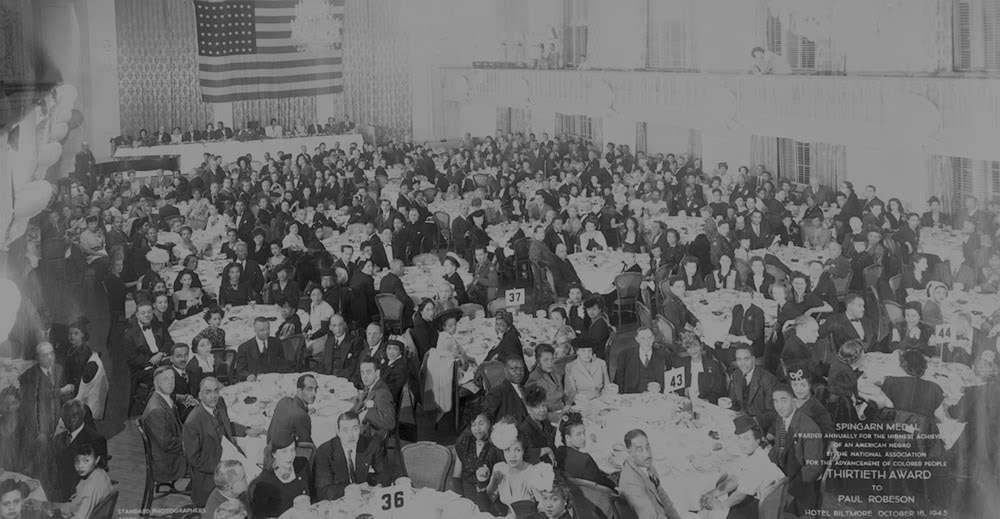
 Paul Leroy Robeson, born in New Jersey in 1898, earned an academic scholarship to Rutgers College in 1915. After graduation, Robeson went on to Columbia Law School. He paid his fees there by playing with the National Football League for three years. However, after briefly working in a law firm, Robeson turned to theater. He acted in films and on stage, and sang in concert, winning international acclaim. Outspoken in his criticism of racism, Robeson was blacklisted in the 1940s and 1950s because he refused to repudiate his leftist affiliation. Nonetheless, the NAACP gathered this large group of people to celebrate their presentation of the Spingarn Medal to Robeson for his achievements in 1945.
MoralHeroes.org. check it out.
Saturday, November 6, 2010
Black Street Gangs in Los Angeles
This is a very interesting report which shows that from 1965 until 1969 there was virtually no street gang activity in the LA area. The gangs had all become politicized and were in fact working together for the good of the Black community. The federal and local police found this situation to be so undesirable that they in a very short time destroyed the young Black leadership by assassination, subversion, imprisonment on false charges in other words by any means necessary.
These actions on the part of the authorities left a vacuum for the present day gangs and if that wasn't enough the Feds injected massive doses of drugs into the community to insure that the people would become mired in an even bigger problem.
Black Street Gangs in Los Angeles: A History (excerpts from Territoriality Among African American Street Gangs in Los Angeles
Alejandro A. Alonso
In Los Angeles and other urban areas in the United States, the formation of street gangs increased at an alarming pace throughout the 1980s and 1990s. The Bloods and the Crips, the most well-known gangs of Los Angeles, are predominately African American[1] and they have steadily increased in number since their beginnings in 1969. In addition, there are approximately 600 Hispanic gangs in Los Angeles County with a growing Asian gang population numbering approximately 20,000 members.
Post WWII to 1965
The first major period of black gangs in Los Angeles began in the late 1940s and ended in 1965. There were black gangs in Los Angeles prior to this period, but they were small in numbers; little is known about the activity of these groups. Some of the black groups that existed in Los Angeles in the late 1920s and 1930s were the Boozies, Goodlows, Blogettes, Kelleys, and the Driver Brothers. Most of these groups were family oriented, and they referred to themselves as clubs.[2] Max Bond (1936:270) wrote briefly about a black gang of 15-year-old kids from the Central Avenue area that mostly stole automobile accessories and bicycles. It was not until the late 1940s that the first major black clubs surfaced on the East side[3] of Los Angeles near Jefferson High School in the Central Avenue area. This was the original settlement area of blacks in Los Angeles. South of 92nd Street in Watts and in the Jefferson Park/West Adams area on the West side, there were significant black populations. By 1960 several black clubs were operating on the West side[4] of Los Angeles, an area that had previously restricted black residents during the 1940s.
Several of the first black clubs to emerge in the late 1940s and early 1950s formed initially as a defensive reaction to combat much of the white violence that had been plaguing the black community for several years. In the surrounding communities of the original black ghetto of Central Avenue and Watts, and in the cities of Huntington Park and South Gate, white Angelenos were developing a dissatisfaction for the growing black population that was migrating from the South during WWII. During the 1940s, resentment from the white community grew as several blacks challenged the legal housing discrimination laws that prevented them from purchasing property outside the original settlement neighborhoods and integrate into the public schools. Areas outside of the original black settlement of Los Angeles were neighborhoods covered by legally enforced, racially restrictive covenants or deed restrictions. This practice, adapted by white homeowners, was established in 1922 and was designed to maintain social and racial homogeneity of neighborhoods by denying non-whites access to property ownership.
In Huntington Park, Bell, and South Gate, towns that were predominately white, teenagers formed some of the early street clubs during the 1940s. One of the most infamous clubs of that time was the Spook Hunters, a group of white teenagers that often attacked black youths. If blacks were seen outside of the black settlement area, which was roughly bounded by Slauson to the South, Alameda Avenue to the east, and Main[5] Street to the west, they were often attacked. The name of this club emphasized their racist attitude towards blacks, as “Spook” is a derogatory term used to identify blacks and “Hunters” highlighted their desire to attack blacks as their method of fighting integration and promoting residential segregation. Their animosity towards blacks was publicly known; the back of their club jackets displayed an animated black face with exaggerated facial features and a noose hanging around the neck. The Spook Hunters would often cross Alameda traveling west to violently attack black youths from the area. In Thrasher’s study of Chicago gangs, he observed a similar white gang in Chicago during the 1920s, the Dirty Dozens, who often attacked black youths with knives, blackjacks, and revolvers because of racial differences (Thrasher 1963:37). Raymond Wright was one of the founders of a black club called the Businessmen, a large East side club based at South Park between Slauson Avenue and Vernon Avenue. He stated that “you couldn’t pass Alameda, because those white boys in South Gate would set you on fire,”[6] and fear of attack among black youths was not, surprisingly, common. In 1941, white students at Fremont High School threatened blacks by burning them in effigy and displaying posters saying, “we want no ******s at this school” (Bunch 1990: 118). There were racial confrontations at Manual Arts High School on Vermont and 42nd Street, and at Adams High School during the 1940s (Davis 1990:293). In 1943, conflicts between blacks and whites occurred at 5th and San Pedro Streets, resulting in a riot on Central Avenue (Bunch 1990:118). white clubs in Inglewood, Gardena, and on the West side engaged in similar acts, but the Spook Hunters were the most violent of all white clubs in Los Angeles.
The black youths in Aliso Village, a housing project in East Los Angeles, started a club called the Devil Hunters in response to the Spook Hunters and other white clubs that were engaging in violent confrontations with blacks. The term "Devil" reflected how blacks viewed racist whites and Ku Klux Klan members. The Devil Hunters and other black residents fought back against white violence with their own form of violence. In 1944, nearly 100 frustrated black youths, who were denied jobs on the city’s streetcar system, attacked a passing streetcar and assaulted several white passengers (Collins 1980: 29). During the late 1940s and early 1950s, other neighborhood clubs emerged to fight the white establishment. Members of the Businessmen and other black clubs had several encounters with the Spook Hunters and other white clubs of the time.
During the 1960s, conflicts among the black clubs were growing and, as more white residents continued to move and the white clubs began to fade, the black clubs moved from interracial violence to intraracial violence. The Gladiators, based at 54th Street and Vermont Avenue, were the largest black club on the West side, and clashes between other black gangs were increasing as intra-racial violence between black club members was on the rise. By 1960 several clubs emerged on the West side and rivalry between East side and West side clubs developed, along with infighting among clubs organized on the same side of town (Figure 4.1). The Businessmen (an East side club) had a rivalry with both the Slausons (an East side club) and the Gladiators (a West side club). Even though more than 50 percent of the gangs active in Los Angeles were Hispanic, black gangs represented a significant proportion of gang incidents that were rapidly increasing in numbers (Study of Delinquent Gangs 1962: 1). During this time, disputes among these were handled by hand-to-hand combat and by the use of weapons, such as tire irons and knives, but murders were rare. In 1960, the six gang-related murders that occurred in Los Angeles were considered an extremely high number. At that point, black-on-black violence between the clubs was becoming a serious concern in Los Angeles. On the surface, the rivalry between East side and West side clubs was associated with altercations on the football field, disputes over girlfriends, and disagreements at parties, but most of their clashes were rooted in socioeconomic differences between the two. East side youths resented the upwardly mobile West side youths, because East side residents were viewed as economically inferior to those residents who lived on the West side. On the other hand, West side youths were considered less intimidating and lacking the skills to be street savvy and tough. In an effort to prove themselves equally tough, West side youths engaged in several confrontations with East side youths during the early 1960s.
Social-Political Period, 1965-1970
In the aftermath of the rebellion, young people, namely former club members from the community, began to build political institutions to contest social injustices, specifically police brutality, which sparked the 1965 Watts Riots. Following the Watts Riots, and throughout the rest of the 1960s, black groups were organizing and becoming politically radical.
For nearly five years, beginning in 1965, there were almost no active black street gangs in Los Angeles. Several reports that black gang activity was on the decline began to circulate (Klein 1971: 22). According to Sergeant Warren Johnson, “during the mid and late 1960s, juvenile gang activity in black neighborhoods was scarcely visible to the public at large and of minimal concern to south-central residents” (Cohen 1972). It was the formation of these new movements that offered black youths a vehicle of positive identification and self-affirmation that occupied the time and energies that might have been spent in gang activity. A sense of cohesiveness began to form, along with self-worth and positive identification, as pride pervaded the black community (Los Angeles Times 3/19/72).
After the Rebellion in 1965, club members began to organize neighborhood political groups to monitor the LAPD and to document their treatment towards blacks. Ron Wilkins (ex-member of the Slausons), created the Community Action Patrol (CAP) to monitor police abuses (Davis 1990:297), and William Sampson (ex-member of the Slausons), along with Gerald Aubry (ex-member of the Orientals), started the Sons of Watts, whose key function was to “police the police” (Obtola 1972:7). The B started a chapter in Los Angeles shortly after Huey Newton, and Bobby Seale started the Party in Oakland, California, in 1966. The BPP in Los Angeles also organized both the black on several high schools campuses in Los Angeles and the black, a meeting place for black residents concerning community issues on Florence and Broadway in 1967. Ron "Maulana" Karenga organized a nationalistic group called US Organization, and Tommy Jacquette organized the Self Leadership for All Nationalities Today (SLANT) in October of 1966 (Bullock 1969:67; Tyler 1982: 222). After splitting away from the US Organization, Hakim Jamal started the Malcolm X Foundation in 1968, and Robaire Nyjuky founded the Marxist Leninist Maoist (MLM) which had an office on 78th Street and San Pedro (Tyler 1983:237). Student Non-ViolentCoordinating Committee (SNCC), a national organization of black nationalists visited Los Angeles and opened an office on Central Avenue in 1967. Also during this period, Ron Karenga created Kwanza, a non-religious holiday that celebrates African heritage.
All these groups were formed in the wake of the 1965 rebellion to provide political support to the civil rights movement that was gaining strength within the black community of Los Angeles. There were several other black nationalist groups in Los Angeles, but the Panthers and US Organization were considered to have the largest following and the most political influence in the black community of Los Angeles following the Watts Rebellion. The BPP heavily recruited members from the Slausons, an East side club, while the US Organization had a large a following from the West side clubs, including the Gladiators, but members of both political groups came from a variety of different clubs from all over Los Angeles. _____________Carter was elected president of the Los Angeles Chapter of the black Panther Party (BPP), whose sole purpose was monitoring the actions of the Los Angeles Police Department. Several members of the black Panthers and the US Organization[7] headed by Ron “Maulana” Karenga, were at one time members of the black clubs of Los Angeles during the 1950s and early 1960s. Some experts have suggested that the rivalry between the BPP and US was rooted in previous club rivalry, but it was actually associated with the opposite philosophies of the two groups.
After the formation of several progressive groups in Los Angeles, local and federal law enforcement agencies began to target those groups that they viewed as a threat to society and the nation as a whole. The emerging black consciousness of the 1960s, that fueled the political movement, was viewed as hostile. The efforts of these political and militant groups to organize young blacks against police brutality were repressed by the FBI, because they specifically viewed the actions of the Panthers and other groups as subversive and a threat to the security of the nation. Chief Thomas Reddin of the Los Angeles Police Department retained the military model and police tactics that his predecessor (Chief Parker) had employed for sixteen years. Reddin believed that the black Panthers represented a major threat to the safety of his officers and their authority on the streets (Scheisl 1990: 168).
By 1967, the Panthers were one of the strongest black political groups in the nation, and by November 1968, J. Edgar Hoover dispatched a memorandum calling his field agents to “exploit all avenues of creating ...dissension within the ranks of the BPP” (Churchill and Wall 1990:63). This was accomplished by the use of counterintelligence (COINTELPRO) which are tactics designed to divide, conquer, weaken, and to make ineffective the actions of a particular organization. COINTELPRO tactics that the FBI began to use against the BPP to weaken its power base, were previously used during the 1940s and throughout the 1950s against the Socialist Workers Party (SWP) and the Communist Party (CPUSA) in the United States (Churchill & Wall 1990:37). From 1968-1971, these tactics were used against the BPP to control and neutralize what was believed to be “a dangerous black political group.” The most vicious and unrestrained application of COINTELPRO techniques during the late 1960s and early 1970s was clearly reserved for the BPP (Churchill & Wall 1990:61; Horne 1995:13).
Read more of this excellent report
see also
RACIALIZED IDENTITIES AND THE FORMATION OF STREET GANGS IN LOS ANGELES
Wednesday, October 6, 2010
Claudia Jones The Black Woman that created London Carnival
Trinidadian Claudia Jones was a civil rights worker, refugee and journalist. She set up the first ever weekly West Indian paper and in 1959 in response to the racist riots of 1958 created the first ever carnival. She also campaigned against racist immigration and for decent housing for immigrants from the Commonwealth who had been invited to Britain by Enoch Powell
Claudia Jones 1
Claudia Jones 2
Claudia Jones 3
Claudia Jones 1
Claudia Jones 2
Claudia Jones 3
Wednesday, August 11, 2010
LUXTON LAKE: Historic 'Lucky Lake' inspires documentary film | recordonline.com
Historic 'Lucky Lake' inspires documentary film | recordonline.com
I came across a video that mentioned the African American
resort community of Luxton Lake and decided to share it here.
I'd actually be interested in finding more stories like or similar
to this one if anyone out in cyber space would like to share with me.
A letter to the editor by Melva Jackman re; her property
The article “Is the individual greater than the hole?” (The River Reporter, February 16-22, 2006) redirects the issue of my property access to “the future of Luxton Lake,” when in fact one has nothing to do with the other. Michael Silvestri’s letter “Keep the lake’s future open,” published in the following issue, builds on this error.
In the first place, the proposed driveway would not cross the lakebed as Silvestri describes. It would be located along the old shoreline where, I assure you, the waters of any theoretically reconstructed Luxton Lake would not rise.
Beyond that, however, the article implies that I am putting my personal needs ahead the common good of property owners around Luxton Lake. On the contrary, I doubt that anyone in the Luxton Lake area has greater respect and concern for the community or a longer history in the community than I do.
My parents, Elmore and Estelle Hill, were the first African Americans to purchase property at “Lucky Lake” as it was then called, when the development opened in 1953. They ran the lodge from 1954 until the late 1960s. I was a summer resident from the age of nine until I was in college. I was the first African American child to attend the Narrowsburg Central Rural School in the historic year of 1954, when I was in the fourth grade, and 1955, when I was in the fifth grade.
I remember the lake as the largest, most beautiful one in the area, with fish in abundance. I learned to fish in Luxton Lake. I learned to swim in Luxton Lake. I learned to row a boat on Luxton Lake. In 1981, when the Lake Ridge Estates subdivision opened, I was among the first to purchase lakefront property and the first to establish a home.
From 1982, when the dam was breached, until about four years ago, the Jackman home was the only dwelling on the far side of the new bridge that eventually replaced the dam. Most of the Lake Ridge Estates property was just held for investment purposes and speculation. All the while, my family and I have enjoyed and appreciated the natural beauty of the valley and surrounding area.
I worked for years on behalf of the Luxton Lake Property Owners Association to find a way to get the lake restored. My conclusion, based on research and interviews on the current policy and practice in the environmental regulation community, was that a new dam of comparable size would never be approved or the price would be prohibitive due to the size of the watershed.
A few “concerned citizens” have a problem with the fact that I own the lakebed property. Bob Matthews, whom I would not describe as a “neighbor,” owns the adjoining vacant property to mine. His property is for sale and has been for sale by various owners since 1981. He has described himself to me as a “developer” and threatened to make sure that I will never get anything done about a new driveway or anything else. I have made efforts to work with the new Luxton Lake Association (which Bob Mathews just recently joined) to no avail. The new board has chosen to ignore my communications and to undermine and misrepresent my objectives to newcomers such as Michael Silvestri. In all the years I have been at Luxton Lake, I have never had a problem or disagreement with anyone until now. I believe that conflict is being created and my driveway approval is a casualty,
I would hope that the focus would return to that of a retired schoolteacher from New York City who needs a viable year-round driveway.
And to the property owners around Feagle’s Lake and other locations where dams are in need of repair: repair them at all cost. Once they are gone, it is very difficult to get them back again. That was the fate of the Luxton Lake dam. There has been talk of rebuilding it for more than 20 years.
Melva Jackman
Narrowsburg, NY
The Department of Environmental Conservation said the 100-year-old laid-up stone dam was unstable and posed a threat to houses below the dam. They ordered it to be blown up. Some residents saw it differently and launched an unsuccessful lawsuit that alleged discrimination.
A letter to the editor by Melva Jackman re; her property
Future of lake not the real issue
The article “Is the individual greater than the hole?” (The River Reporter, February 16-22, 2006) redirects the issue of my property access to “the future of Luxton Lake,” when in fact one has nothing to do with the other. Michael Silvestri’s letter “Keep the lake’s future open,” published in the following issue, builds on this error.
In the first place, the proposed driveway would not cross the lakebed as Silvestri describes. It would be located along the old shoreline where, I assure you, the waters of any theoretically reconstructed Luxton Lake would not rise.
Beyond that, however, the article implies that I am putting my personal needs ahead the common good of property owners around Luxton Lake. On the contrary, I doubt that anyone in the Luxton Lake area has greater respect and concern for the community or a longer history in the community than I do.
My parents, Elmore and Estelle Hill, were the first African Americans to purchase property at “Lucky Lake” as it was then called, when the development opened in 1953. They ran the lodge from 1954 until the late 1960s. I was a summer resident from the age of nine until I was in college. I was the first African American child to attend the Narrowsburg Central Rural School in the historic year of 1954, when I was in the fourth grade, and 1955, when I was in the fifth grade.
I remember the lake as the largest, most beautiful one in the area, with fish in abundance. I learned to fish in Luxton Lake. I learned to swim in Luxton Lake. I learned to row a boat on Luxton Lake. In 1981, when the Lake Ridge Estates subdivision opened, I was among the first to purchase lakefront property and the first to establish a home.
From 1982, when the dam was breached, until about four years ago, the Jackman home was the only dwelling on the far side of the new bridge that eventually replaced the dam. Most of the Lake Ridge Estates property was just held for investment purposes and speculation. All the while, my family and I have enjoyed and appreciated the natural beauty of the valley and surrounding area.
I worked for years on behalf of the Luxton Lake Property Owners Association to find a way to get the lake restored. My conclusion, based on research and interviews on the current policy and practice in the environmental regulation community, was that a new dam of comparable size would never be approved or the price would be prohibitive due to the size of the watershed.
A few “concerned citizens” have a problem with the fact that I own the lakebed property. Bob Matthews, whom I would not describe as a “neighbor,” owns the adjoining vacant property to mine. His property is for sale and has been for sale by various owners since 1981. He has described himself to me as a “developer” and threatened to make sure that I will never get anything done about a new driveway or anything else. I have made efforts to work with the new Luxton Lake Association (which Bob Mathews just recently joined) to no avail. The new board has chosen to ignore my communications and to undermine and misrepresent my objectives to newcomers such as Michael Silvestri. In all the years I have been at Luxton Lake, I have never had a problem or disagreement with anyone until now. I believe that conflict is being created and my driveway approval is a casualty,
I would hope that the focus would return to that of a retired schoolteacher from New York City who needs a viable year-round driveway.
And to the property owners around Feagle’s Lake and other locations where dams are in need of repair: repair them at all cost. Once they are gone, it is very difficult to get them back again. That was the fate of the Luxton Lake dam. There has been talk of rebuilding it for more than 20 years.
Melva Jackman
Narrowsburg, NY
Wednesday, July 14, 2010
Plenty of African American Charisma
I've been watching Charismaallover's Weblog
produced by Tamarva Butler over a period of about 24 months. I happened to see it on the Blogged web site today and was pleased to see that it has become even better than it was the last time I saw it. Ms Butler's education in Communication has not gone to waste. The young sister has put together an interesting, visually pleasing site that informs and entertains. This weblog is covering a variety of topics of interest to the African American viewer. I think it would be good for Black children also because Butler projects a very positive image as she touches historical and contemporary subjects. I cant' wait to see what she'll be producing when she turns pro. Check it out and see for yourself.

Wednesday, July 7, 2010
African American Mississippi Man Starts Record Sixth Murder Trial
African American Mississippi Man Starts Record Sixth Murder Trial
An African American man, Curtis Flowers, made history this week when he became the first person in U.S. history to ever go on trial for murder six times for the same crime. Mr. Flowers has been in jail in Mississippi since 1996, accused of the murder of four people at a furniture store. Jury selection started this week in tiny Winona, Mississippi, population 5,482.
Sunday, May 9, 2010
Descendants of freed slaves fight to keep historic black church

Descendants of freed slaves fight to keep historic black church
Originally published February 28, 2010
By Ron Cassie
News-Post Staff
In 1878, near Jefferson , Md., in one of the state's first communities founded by freed slaves, African-American citizens bought the land where they soon built their own "colored" school, church and cemetery.
The first church services were held in the schoolhouse in the mid-1880s. In 1899, members erected the simple, wooded-framed, steepled Sunnyside Methodist Episcopal Church that still stands. The school remained in use until desegregation.
Today, descendants of those freed slaves, the 30 remaining members of the congregation, are fighting the United Methodist Church in court to keep possession of the historic church, the former school, a community hall now and the cemetery where more than 100 of their ancestors are buried.
In late 2008, in a dispute over the church's future and its increasing apportionment payments, the Sunnyside flock renounced its affiliation with the United Methodist Church. Hoping to reorganize as an independent, Bible-centered community church, congregation board members are now defendants in a court action brought by the Baltimore-Washington Conference of the United Methodist Church for failing to vacate the church grounds.
The one-acre property is valued at $150,000, according to the Maryland Department of Assessments and Taxation.
(read complete article)
Thursday, May 6, 2010
Black Men in Navy Blue During the Civil War
Printed on: Thursday, May 6, 2010
Fall 2001, Vol. 33, No. 3
Black Men in Navy Blue During the Civil War
By Joseph P. Reidy
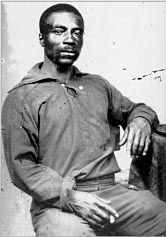 |
Civil War sailor George Commodore. (NARA, Records of the Veterans Administration, RG 15)
|
Given the wealth of available information about Civil War soldiers, the comparative poverty of such knowledge about Civil War sailors borders on the astonishing. Two explanations account for this imbalance. First, the broad narrative of presidential leadership and the clash of armies in Virginia that Ken Burns's The Civil War told so powerfully all but excludes naval forces from the tale. Second, existing accounts of the naval Civil War have focused on the strategic role of naval forces in the contest, the governmental architects of naval policy, the naval officers who masterminded operations, and the innovations in technology and weaponry to the near exclusion of the enlisted sailors' war. No image of "Jack Tar" comparable to Bell I. Wiley's classic portraits of "Billy Yank" and "Johnny Reb" fills the popular imagination or the works of Civil War historians.1
Because the navy, unlike the army, was racially integrated, understanding the history of black sailors requires some effort but even more interpretive caution to unravel it from that of all Civil War sailors. Exploring the similarities and differences in the experiences of black and white enlisted men must avoid viewing the racial groups in strictly monolithic terms that do not allow for internal complexity and diversity and shifting, if not altogether porous, borders. The work must also beware currently popular understandings of the black soldiers' experience. Often framed around the Fifty-fourth Massachusetts Volunteer Infantry, that tale depicts stoic sacrifice and daunting perseverance in pursuit of freedom and equality that in the end was crowned with "Glory," the impression conveyed by the popular feature film. The black sailors' story fits awkwardly, if at all, within that image.
The study of African Americans in the Civil War navy must begin with determining their numbers. During the first decade of the twentieth century, when the secretary of the navy was quizzed about the service of black men in the Civil War, senior officers who had served in the conflict recalled that approximately one-quarter of the enlisted force was black. In a grand display of false precision, the secretary's office concluded that 29,511 black men had served by taking the known figure of Civil War enlistments (118,044) and dividing by four.2 That figure remained essentially unchallenged until 1973, when David L. Valuska's dissertation revised it downward to slightly less than ten thousand men, based upon his survey of surviving enlistment records.3 Over the past decade, a research partnership among Howard University, the Department of the Navy, and the National Park Service has made possible an examination of a fuller array of records than earlier researchers, working as individuals, were able to explore.4 As a result, nearly eighteen thousand men of African descent (and eleven women) who served in the U.S. Navy during the Civil War have been identified by name.5 At 20 percent of the navy's total enlisted force, black sailors constituted a significant segment of naval manpower and nearly double the proportion of black soldiers who served in the U.S. Army during the Civil War.6
At the start of the conflict, the army and the navy drew upon separate traditions regarding the service of persons of African descent. Following adoption of the federal Militia Act in 1792, the army excluded black men, and the prohibition remained in effect until the second summer of the Civil War. The navy, in contrast, never barred black men from serving, although from the 1840s onward regulations limited their numbers to 5 percent of the enlisted force. When the war began, several hundred black men were in the naval service, a small fraction of those with prewar experience and a figure well below the prescribed maximum. During the first ninety days after Fort Sumter, when nearly three hundred black recruits enlisted, fifty-nine (20 percent) were veterans with an average of five years of prior naval service per man.7 Over succeeding months, the proportion of black men in the service increased rapidly. At the end of 1861, they made up roughly 6 percent of the crews of vessels. By the summer of 1862, the figure had climbed to nearly 15 percent.8
At first, navy officials did not treat black manpower separately from their general need for men as the service expanded and as volunteer army units competed for the able-bodied. With enlistment centers at the major Atlantic ports from Chesapeake Bay through New England, recruiters could draw upon the international seafaring fraternity to supplement the recruits from the seaboard states. By the end of the war, some 7,700 of the roughly 17,000 men whose place of nativity is recorded had been born in states that remained within the Union. Not surprisingly, the coastal states contributed the largest numbers of men: New York and Pennsylvania roughly 1,200 each, and Massachusetts and New Jersey more than 400 each. Many of these men had been mariners before the war, and still others had worked on the docks and shipping-related businesses of the seaport cities. Additional recruits with prior maritime experience on the lakes and rivers of the nation's interior also enlisted; these included 420 natives of Kentucky. The largest number of black men from any of the northern states— more than 2,300 in all— hailed from Maryland. The maritime culture of Chesapeake Bay, with its numerous tributaries and the port of Baltimore, offer part of the explanation for the large number of Marylanders in naval service. The size of the Maryland contingent also benefited from a spring 1864 agreement between army and navy officials to transfer nearly eight hundred black Marylanders from incomplete units of the U.S. Colored Troops into the navy.9
Another fifteen hundred men were born outside of the United States, chiefly Canada and the islands of the Caribbean.10 Like their counterparts from the United States, the foreign-born men entered service for a variety of reasons. John Robert Bond, for instance, a mariner of mixed African and Irish descent from Liverpool, England, enlisted during 1863 "to help free the slaves," as his descendants recall. Seriously wounded the following year, he was discharged and pensioned after a long recuperation. He settled in Hyde Park, Massachusetts, amid other black Civil War veterans.11
The remainder of the 17,000 men whose place of nativity is recorded— some 7,800 in all— were born in the seceded Confederate states. The firsthand experience that these men had with slavery distinguished them from their freeborn northern counterparts. Moreover, whereas northern freemen could enlist when they chose, men held in bondage often had to rely on the circumstances of war for the opportunity to do so. Not simply awaiting their fate, black men escaping from slavery helped create opportunities for the federal government to protect them and accept their offers of service. By September 1861, the volume of requests from commanders of naval vessels regarding authorization to enlist fugitive slaves reached such proportions that Secretary of the Navy Gideon Welles, a Connecticut native of antislavery bent, felt obliged to act. Welles permitted the enlistment of former slaves whose "services can be useful," stipulating that the "contrabands" be classified as "Boys," the lowest rung on the rating and pay scales and one traditionally reserved for young men under the age of eighteen.12 (The term "contraband" itself had within weeks of Fort Sumter sprung into widespread use throughout the North as a rationale for treating such persons as plunder under international conventions of warfare.) The practical effect of this policy became evident when Flag Officer Samuel F. Du Pont established federal control of the harbor at Port Royal, South Carolina, in November 1861. This beachhead eventually became the home port of the South Atlantic Blockading Squadron, with repair and supply facilities that employed nearly a thousand contrabands. At the same time, vessels in all the squadrons began taking fugitive slaves on board, enlisting the men as needed and forwarding others to places of safety.13
The large concentrations of enslaved African Americans on the plantations along the Mississippi River and the strategic importance of the river to both sides assured that Secretary Welles's directive regarding the employment of contrabands would have special relevance to the Mississippi Squadron. In April 1863, as the combined army and navy assault on Vicksburg, Mississippi, took shape, Flag Officer David D. Porter instructed the commanders of vessels to take full advantage of "acclimated" black manpower.14 Under these guidelines, more than two thousand men enlisted on the vessels that plied the Mississippi and its tributaries.15 The refugee camps that sprang up in Union-occupied areas also proved a rich source of recruits. In the camps of coastal North Carolina, for instance, recruiters from the North Atlantic Blockading Squadron displayed posters promising good pay and other amenities and urging volunteers to "Come forward and serve your Country."16
The success of these efforts to recruit black men from the Union-occupied regions of the South tipped the demographic balance among black sailors. Largely free men with considerable naval experience at the start of the war, over time the force included growing numbers of recently enslaved men with only limited maritime experience. Not surprisingly, most were from the states where Union naval forces operated: the Carolinas, Mississippi, and Louisiana. The largest contingent of southern-born men, however, was the Virginians, more than twenty-eight hundred strong, numbers of whom had been sold before the war from their native state to plantation regions farther south. The fact that nearly six thousand (roughly 35 percent) of the black sailors whose nativity is known came from the Chesapeake Bay region is striking. Even more so is that more than eleven thousand men were born in the slave states as against four thousand born in the free states. Even allowing for the fact that a small fraction of those from the slave states had been born free, nearly three men born into slavery served for every man born free. Hardly predictable from the record of black sailors in the antebellum navy, this demographic division profoundly influenced the black naval experience during the war.
Quarterly muster rolls of vessels clearly demonstrate the navy's reliance on black manpower between 1862 and 1864, as the following table indicates.17
Table 1: Aggregate Percentages of Black Enlisted Men Serving on Board U.S. Naval Vessels by Quarter of the Calendar Year, 1862 - 1865
| |
Quarter
|
Percentage
|
1st Quarter 1862
|
8
|
2nd Quarter 1862 through 2nd Quarter 1863
|
15
|
3rd Quarter 1863 through 3rd Quarter 1864
|
23
|
4th Quarter 1864 through 3rd Quarter 1865
|
17
|
4th Quarter 1865
|
15
|
Source: Muster Rolls of Vessels, Records of the Bureau of Naval Personnel, Record Group (RG) 24, National Archives.
| |
From the spring of 1861 through the fall of 1864, the percentage of black men increased steadily from a starting point of less than 5 percent to a peak of 23 percent. In this context, the Navy Department's rule-of-thumb estimate from early in the twentieth century that one quarter of the enlisted force was black comes very close to describing the reality from summer 1863 through summer 1864. By the fall of 1865, after most wartime volunteers had been discharged, black men still constituted 15 percent of the enlisted force, more than three times the percentage of black men in service at the start of the war.
The racial demographics of the enlisted force varied— often significantly— by squadron and by vessel. In the European Squadron, for instance, a handful of ships cruising the North Atlantic in pursuit of Confederate commerce raiders and blockade runners, the number of black sailors was small. Given that most of the ships were outfitted and manned early in the war, the demographic profile of Kearsarge, perhaps the most famous of the bunch, wherein black men made up 5 to 10 percent of the crew, was entirely typical. In the North Atlantic Blockading Squadron, which drew men from the traditional enlistment points along the northeast Atlantic seaboard as well as from the coastal regions of Virginia and North Carolina, the proportion of black enlisted men was considerably higher than that of the European Squadron. The Mississippi Squadron, which drew recruits from Cincinnati, Ohio, and Cairo, Illinois, as well as from its areas of operations along the Mississippi River and its tributaries, relied most on black manpower. In David Farragut's West Gulf Blockading Squadron, the proportion of black sailors fell well short of that in the Mississippi Squadron or the North Atlantic Blockading Squadron.
Table 2: Percentages of Black Enlisted Men Serving on Board U.S Naval Vessels in Three Representative Squadrons, Second Quarter of 1864
| ||
Squadron
|
Percentage
| |
North Atlantic
|
25
| |
West Gulf
|
20
| |
Mississippi
|
34
| |
Source: Muster Rolls of Vessels, RG 24, National Archives.
| ||
At the level of individual vessels, the racial demographics of crews reflected a more complex array of variables, including the type of vessel, its tactical mission within a larger unit of operations, and the personality of the captain, his officers, and the ship's company. The broader cultural biases that associated persons of African descent with menial labor and personal service also influenced these demographic patterns. The disproportionate presence of black sailors on supply ships illustrates this point. During 1863 and 1864, virtually every man attached to USS Vermont, moored at Port Royal and serving as the supply ship for the South Atlantic Blockading Squadron, was black.18 At Hampton Roads, where another vintage ship-of-the-line, USS Brandywine, stored supplies for the North Atlantic Blockading Squadron, the proportion of black enlisted men ranged between 47 and 57 percent during 1863 and 1864.19
In analogous fashion, black men filled an inordinately large number of the enlisted billets on the barks and schooners that served as colliers and ordnance storeships. Between 67 and 100 percent of the enlisted men serving in Charles Phelps, Fearnot, J. C. Kuhn, Albemarle, Arletta, and Ben Morgan were black.20 In the supply steamers New National (Mississippi Squadron), William Badger (North Atlantic Blockading Squadron), and Donegal (South Atlantic Blockading Squadron), the proportion of black enlisted men ranged from 63 to 100 percent.21 Conversely, black men made up the smallest proportion of men in the sloops of war and other ocean-going warships that were the backbone of the late antebellum navy and the workhorses of the blockading squadrons.
The black enlistees who had been slaves— in many instances down to the time of enlistment— stood apart from the freemen of all colors and nations. Often accepted into service on a supposition of inferiority, stigmatized as "contrabands," and rated and paid at the lowest levels of the rating and pay scales, these men often could not escape the stereotypes cast upon them no matter how creditably they performed their assigned duties. In, but not necessarily of, the crews with which they served, the contrabands performed the manual labor necessary to keep a steam vessel functioning and the busywork that officers considered the foundation of good order and discipline on warships: holystoning, scrubbing, scraping, painting, and polishing. Although black men routinely served on gun crews at general quarters, they stood a far greater chance of serving with small-arms crews, armed with swords, rifles, and pistols, for repelling boarders, and with damage control units, armed with water hoses for dousing fires and battle-axes for cutting away damaged spars and rigging. Small-arms crews consisting of contrabands generally exercised separately from those consisting of white sailors.22
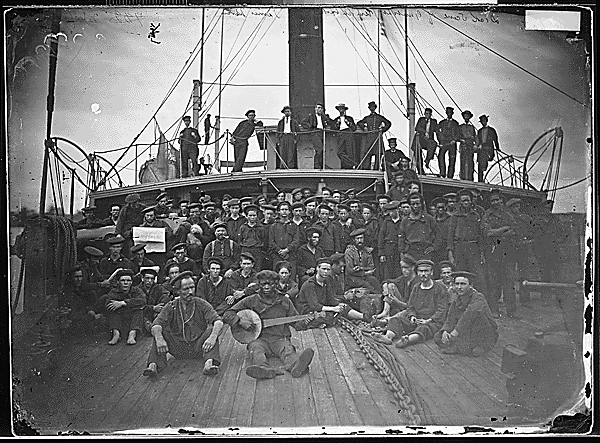
USS Miami (Courtesy, Naval Historical Center)
|
USS Hunchback (NARA, NWDNS-111-B-2011)
|
Given the pervasive prejudice among white officers and enlisted men, black men sought out their own company as much as possible. Such a pattern of association derived largely from the rating structure, but enlistment patterns and prewar associations also played a part. A surviving photograph of USS Miami illustrates. Around the time of the photograph, about one-quarter of the approximately one hundred enlisted men were of African descent, nearly all contrabands rated as boys and recently enlisted at Plymouth, North Carolina; a number shared the surnames of Etheridge, Johnson, White, and Wilson.23 In a similar photograph of Hunchback, the cluster of black men to the right invites similar scrutiny. During the middle of 1864, approximately twenty-five of the roughly one hundred enlisted men were of African descent. Fifteen of the men were contrabands from Maryland who had recently been transferred from the army to the navy.24

Joseph P. Reidy has taught U.S. history at Howard University since 1984 and for the past three years has also served as the Associate Dean of the Graduate School. He has published widely on slavery, the Civil War, and slave emancipation in both scholarly and popular journals. At present he directs the African-American Sailors Project at Howard University, from which work the present article derives.
Articles published in Prologue do not necessarily represent the views of NARA or of any other agency of the United States Government.
|
The U.S. National Archives and Records Administration
8601 Adelphi Road, College Park, MD 20740-6001 •
Telephone: 1-86-NARA-NARA or 1-866-272-6272
Also see Turn of the century black sailors.
Also see African American Crew on WWII Destroyer Escort.
Telephone: 1-86-NARA-NARA or 1-866-272-6272
Also see Turn of the century black sailors.
Also see African American Crew on WWII Destroyer Escort.
Monday, March 1, 2010
The Amistad Digital Resource for Teaching African American History
For Teachers of American History, as well as those who are interested in African American History do not miss,
The Amistad Digital Resource for Teaching African American History.
This excerpt from their About page is just a whiff of the stimulating well presented material that is available on this site. I can add that it's a well designed, easy to navigate place, with lots of information and the promise of more to come.

The photo of Capt . Charles young is a teaser, just to pique your curiosity. Look him up.
The Amistad Digital Resource for Teaching African American History.
This excerpt from their About page is just a whiff of the stimulating well presented material that is available on this site. I can add that it's a well designed, easy to navigate place, with lots of information and the promise of more to come.

The Amistad Digital Resource provides a much-needed solution to help teachers fulfill this new curricular requirement. It is designed not as a classroom text, but as a unique multimedia resource for secondary school teachers to enhance their knowledge and ability in teaching African-American history. When completed, it will include hundreds of rare and iconic photographs, audio recordings, news clips, and excerpts of oral history interviews with a descriptive narrative text explaining significant themes and key events in African-American history, from slavery to the twenty-first century.Check it out at, http://www.amistadresource.org/
The photo of Capt . Charles young is a teaser, just to pique your curiosity. Look him up.
Wednesday, February 10, 2010
The Pullman Porter the Vanguard of the Black Middle Class

In order to get a taste of the social history of a Pullman porter
listen to the attached NPR broadcast titled
by journalist Larry Tye. Tye says that the job was one of the best for African Americans at the time, and that it was a foothold in the American workplace.
An interview with a former Pullman porter.
Tuesday, January 12, 2010
Glen Beck said: "African-American is a bogus, PC, made-up term.
Beck: "African-American is a bogus, PC, made-up term. I mean, that's not a race"
What did Beck say?
I just happened to listen to Smokey Robinson the other day, on the same topic.
What did Smokey say?
A Black American - Def Poetry Jam
While we're on the topic:
What did Carlos say?
Now what game is the government playing exactly?
What do you say?
Saturday, December 19, 2009
A Music Break with Roland Kirk
Rahsaan Roland Kirk Volunteered Slavery
Rahsaan Roland Kirk "Misty & I Want Talk" Live Montreux 1972
Background information
Birth name Ronald Theodore Kirk
Born 7 August 1935
Died 5 December 1977 (aged 42)
Genres jazz (hard bop)
Occupations musician, composer, arranger, bandleader
Instruments tenor saxophone, clarinet, stritch, manzello, flute, whistles
Labels King, Chess, Prestige, Mercury, Limelight, Verve, Atlantic, Warner Brothers
Website http://www.alfanet.hu/kirk/index2.html
Rahsaan Roland Kirk (August 7, 1935[1] – December 5, 1977) was a blind American jazz multi-instrumentalist who played tenor saxophone, flute and many other instruments. He was renowned for his onstage vitality, during which virtuoso improvisation was accompanied by comic banter, political ranting, and the ability to play several instruments simultaneously.
Friday, December 18, 2009
Professor James Small on Post Slavery Trauma Syndrome
Professor James Small was born in 1945, on Arcadia plantation, located on the banks of the Waccamaw River. This Lowland rice plantation is located where the Waccamaw, Peedee, and Black Rivers converge to meet the Atlantic Ocean, on the shores of historic Georgetown, South Carolina. Prof. Small was born to a family that traces their descent from enslaved Africans, to the Yoruba, Akan, and Ewe people of West Africa. Prof. Small's heritage also stems from the Native American ancestors that inhabited these South Carolinian shores. Both his maternal great-grandmother and his paternal great-grandmother were members of the Chicora Nation, and made their home along the mighty Waccamaw River.
Prof. Small graduated from the all Black Howard High School in Georgetown, South Carolina in 1964. He then served in the U.S. Navy for two years during the Vietnam era. Upon his release from military service, Prof. Small moved to New York City where he joined the organization of Afro-American Unity founded by the legendary Malcolm X. In 1967, Prof. Small became Imam (minister) of the Muslim Mosque Incorporated, also founded by Malcolm X. In 1975 Prof. Small traveled to the Holy City of Mecca in Saudi Arabia to make his holy pilgrimage, the Hajjah. For eleven years Prof. Small served as principal bodyguard to the late Ella L. Collins, the sister of Malcolm X, the then President of the Organization of Afro-American Unity (O.A.A.U.)
Between the years of 1966 and 1980, Prof. Small held membership in the Student Non-violent Coordinating Committee (S.N.C.C.), the N.A.A.C.P, Uhuru fighters and O.A.A.U. During this period Prof. Small had the opportunity to interact with such historical giants as Congressman Adam Clayton Powell Jr., Kwame Ture, H. Rap Brown of S.N.C.C, Eldridge Cleaver, Zaid Shakur, and Lumumba Shakur of the Black Panther Party (B.P.P.) in which he served as a liaison between the B.P.P. and the O.A.A.U. Prof. Small has been a member of the Association for the Study of Classical African Civilization (A.S.C.A.C.) for 14 years. He served as President of A.S.C.A.C. Eastern Region for two years, where he worked and studied with Dr. John Henrik Clarke, Dr. Yosef A. A. Ben Jochannan, Dr. Leonard Jeffries, Dr. Ivan Van Sertima, Dr. Asa Hilliard, Dr. Wade Nobles, Dr. Amos Wilson and Dr. Francis Cress Welsing, just to name a few.
POST SLAVERY TRAUMA SYNDROME PT 1 JAMES SMALLS
POST SLAVERY TRAUMA SYNDROME PT 2 JAMES SMALLS
POST SLAVERY TRAUMA SYNDROME PT 3 JAMES SMALLS
POST SLAVERY TRAUMA SYNDROME PT 4 JAMES SMALLS
POST SLAVERY TRAUMA SYNDROME PT 5 JAMES SMALLS
POST SLAVERY TRAUMA SYNDROME PT 6 JAMES SMALLS
POST SLAVERY TRAUMA SYNDROME PT 7 JAMES SMALLS
POST SLAVERY TRAUMA SYNDROME PT 8 JAMES SMALLS
Subscribe to:
Posts (Atom)