 |
| Claudette Colvin |
 |
| Ruby Bridges Goes To School |
 |
| Elizabeth Eckford |
 |
| Fannie Lou Hamer |
 |
| Angela Y. Davis |
|
| Claudette Colvin |
|
| Ruby Bridges Goes To School |
|
| Elizabeth Eckford |
|
| Fannie Lou Hamer |
|
| Angela Y. Davis |
 |
| MAGGIE LENA WALKER |

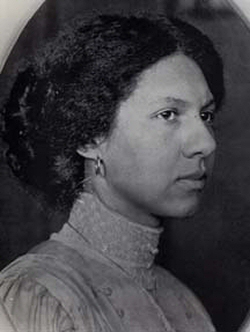 |
| Meta Vaux Warrick Fuller |
 |
| Sorrow |
 |
| Water Boy |
 |
| Talking Skull |

 |
| Bisque Head |

SOJOURNER TRUTH
 |
 Her age is approximately fixed because she was liberated under the
act of 1817 which freed all slaves who were forty years old and upward.
Ten thousand slaves were then set at liberty. Those under forty years
of age were retained in servitude ten years longer, when all were eman-
cipated.
Isabella, known to history as Sojourner Truth, and without a rival in the annals of the American Negro, was born a slave of one Col. Ardinburgh in Hurley, Ulster County, New York, sometime during the latter part of the eighteenth century. Her experiences and those of her parents as to the cruel, harsh and brutal treatment received at the hands of those who claimed their service, the many whippings for alleged disobedience and their abandonment when no longer able to be profitable as laborers and the sale of others of her kindred on the auction block by which family ties were broken, made it clear that slavery in the North ^ at that distant day was not unlike what it was two-thirds of a century later south of Mason and Dixon 's line. Up to the time she was ten, Isabella spoke principally the Low Dutch, while those for whom she was employed were Eng- lish. Constant blunders were inevitable and whippings as in- evitably followed. The death of both father and mother occurred while Isabella was quite young. The details of their death are pathetic in the extreme. Isabella's troubles were of the common lot of the slave. In course of time she married and became the mother of several children. Among these was a son whose abduction and sale beyond the boundaries of the State, contrary to law, fired her soul and she began that vigorous protest against the .common practices of the day and appeal for justice that subsequently made her fame national and opened up a career that is not only unique but deserving of perpetual remembrance. At an early period she became sensible of the influence of Christianity in her own life. She became a Methodist and on her removal to New York she joined the John Street Church, the mother of American Methodism and later she attached herself to the Zion Church in the same city, the mother of the African Methodist Episcopal Zion denomination. By the purest accident she learned that a sister whom she had never known had been a member in the same church, but Sojourner did not obtain this knowledge until after that sister's death, when she re- membered having met this sister frequently in class meetings. The circumstances leading to Isabella's removal from the city of New York was her connection with what is known as the Mathias delusion about the year 1837-1840. This led to her giving up her own name and assuming that of Sojourner, to which she added Truth. From New York she went to New England where she ulti- mately became an Anti-slavery lecturer. "Wholly without edu- cation, advanced in years, her influence as a public speaker is a marvel. Nature had given her a very acute mind. She was quick at repartee, was thoroughly in earnest and her judg- ments were shrewd. Her belief in God and that in due time He would deliver her people from bondage was phenomenal. These facts had much to do with the very strong hold she had on all who heard her lectures. Many of the predictions which she made became true in manner and form as she had uttered them. In those dark days at a meeting of anti-slavery men held at Boston, Frederick Douglass struck in the minor key a most de- spairing song. At his conclusion Sojourner Truth rose in the audience and stretching forth her arms in a shrill voice ex- claimed, ''Frederick, is God dead?" The effect was electrical. By a flash the sentiment of the house was changed to one of hope and assurance. Sojourner did not hesitate to call on anyone whom she desired to see, whether she had received an introduction to them or not. Thus it was that she called to see Harriet Beeeher Stowe, the authoress of "Uncle Tom's Cabin." Mrs. Stowe who had company at the time evidently did not care to be bothered with the quaint old woman, but she was no sooner in Sojourner's company than she realized the superior character of her visitor. Instead of abruptly tearing herself away from Sojourner or rudely dismissing her as a bore she requested the privilege from Sojourner of calling in her guests. This was granted and all were made to feel the superior moral power of this untutored black woman of the North. During the Civil "War Sojourner spent a protracted period at Washington in alleviating the sufferings of our sick. Sometimes she was at the hospitals; at other times the "contraband" camps then numerous about the National Capital, found her an angel of mercy. Wliile here she called on President Lincoln, who received her kindly. It was not merely to gratify curiosity nor to express her gratification that such a broad-minded presi- dent was in the White House, but to receive his commendation on her mission as counselor to the freedmen that were assembled by the thousands in and around Washington. In this capacity she visited them in their slab houses, instructing women in domestic duties, preaching the gospel of cleanliness and how to maintain their liberty, the shackles of slavery having been struck from their limbs. In those days "Jim Crow" street cars prevailed in Washing- ton, and it was with difficulty at times that colored people could get seats even in them. Restive under this treatment, Sojourner complained to the president of the street railroads and the "Jim Crow" sign was ordered to be taken off, yet everything was not plain sailing. The following incident deserves attention. "Not long after this, Sojourner having occasion to ride sig- naled the car, but neither conductor nor driver noticed her. Soon another followed, and she raised her hand again, but they also turned away. She then gave three tremendous yelps, 'I want to ride! I want to ride!! I want to RIDE.'' Conster- nation seized the passing crowd; people, carriages, go-carts of every description stood still. The car was effectually blocked up, and before it could move on, Sojourner had jumped aboard. Then there arose a great shout from the crowd, ' Ha ! Ha ! Ha ! ! She has beaten him, etc' The angry conductor told her to go forward where the horses were, or he would put her out. Quietly seating herself, she informed him that she was a passenger. 'Go forward where the horses are, or I will throw you out, ' said he in a menacing voice. She told him that she was neither a Marylander nor a Virginian to fear his threats; but was from the Empire State of New York, and knew the laws as well as he did. Several soldiers were in the car and when other passengers came in, they related the circumstance and said, 'You ought to have heard that old woman talk to the conductor.' Sojourner rode farther than she needed to go; for a ride was so rare a privilege that she determined to make the most of it. She left the car feeling very happy, and said, 'Bless God ! / have had a ride.' "  Another incident is equally suggestive: "She was sent to Georgetown to obtain a nurse for the hospital, which being accomplished they went to the station and took seats in an empty car, but had not proceeded far before two ladies came in and seating themselves opposite the colored woman began a whispered conversation, frequently casting scornful glances at the latter. The nurse, for the first time in her life finding hereelf on a level with poor white folks and being much abashed, hung her poor old head nearly down to her lap, but Sojourner, notliing daunted, looked fearlessly about. At length one of the ladies called out in a weak, faint voice, 'Conductor, con- ductor, does "niggers" ride in these cars?' He hesitatingly answered * Yes — yes — ^yes, * to which she responded, ' 'Tis a shame and a disgrace. They ought to have a "nigger" car on the track.' Sojourner remarked, 'Of course colored people ride in the cars. Street cars are designed for poor white and colored folks. Carriages are for ladies and gentlemen. There are carriages,' pointing out of the window, 'standing ready to take you three or four miles for a sixpence, and then you talk of a "nigger" ear!!!' Promptly acting upon this hint, those white w^omen critics arose to leave. 'Ah!' said Sojourner, 'Now they are going to take a carriage. Good-by, ladies.' " There are many anecdotes told that indicate her quickness at repartee, humor, sarcasm, her original and quaint philosophy. "As Sojourner was returning to the home of Amy Post in Rochester, one evening, after having delivered a lecture in Corinthian Hall, a little policeman stepped up to her and de- manded her name. She paused, struck her cane firmly upon the ground, drew herself up to her greatest height, and in a loud, deep voice deliberately answered, 'I am that I am.' The frightened policeman vanished, and she concluded her walk without further questioning.  "During the war Sojourner met one of her Democratic friends, who asked her, 'What business are you now following?' She quietly replied, 'Years ago, when I lived in the city of New York, my occupation was scouring brass door knobs but now I go about scouring copperheads.' "- ( Northern sympathizer with Confederates during the Civil War.) At a temperance meeting in one of the towns of Kansas, So- journer, whilst addressing the audience, was much annoyed by frequent expectorations of tobacco juice upon the floor. Pausing and contemplating the pools of liquid filth, with a look of disgust upon her face, she remarked that it had been the custom of her Methodist brethren to kneel in the house of God during prayers, and asked how they could kneel upon these floors. Said she, speaking with emphasis, "If Jesus was here He would scourge you from this place." Previous to the war, Sojourner held a series of meetings in northern Ohio. She sometimes made very strong points in the course of her speech, which she knew hit the apologists of slavery pretty hard. At the close of one of these meetings a man came up to her and said, "Old woman, do you think that your talk about slavery does any good? Do you suppose peo- ple care what you say? Why," continued he, "I don't care any more for your talk than I do for the bite of a flea." "Per- haps not," she responded, "but, the Lord walling, I'll keep you scratching. ' ' Sojourner was invited to speak at a meeting in Florence, Mass. She had just returned from a fatiguing trip, and not having thought of anything in particular to say, arose and said, ' ' Chil- dren, I have come here to-night like the rest of you to hear what I have got to saJ^" Wendell Phillips was one of the audience. Soon after this he was invited to address a lyceum, and being unprepared for the occasion, as he thought, began by saying, "I shall have to tell you as my friend, Sojourner Truth, told an audience under similar circumstances, 'I have come here like the rest of you to hear what I have to say.' " After the close of the Civil War, when more than four score years and ten, Sojourner Truth, unlike others who had labored for the abolition of slavery, discerned by intuition what men like Phillips, Garrison and even Douglass, seemed not to compre- hend — that the protection and elevation of the Negro lay not through the exercise of the elective franchise alone, but through the ownership of the soil and industrial education. She advo- cated the location of the newly emancipated masses of the South on the public lands of the West. To that end she addressed meetings urging this course, in different parts of the North, the West and the South, circulating petitions to Congress, and even visiting Washington and endeavoring to create public sentiment in this behalf. It was during one of these visits to Washington, while U. S, Grant was President, that the writer listened to her lecture at the First Congregational Church of this city, where, in her quaint and original style, she drew crowds to hear her, many of whom had heard her in their youthful days in New York or in New England. Sojourner had foreseen that the cities of the North and East would attract large numbei^ of colored people from the South, and that the over-crowding of the labor market would react upon the race in increasing the criminal element and in weak- ening their physical stamina. But if they were settled on the public lands of the West, there would follow careful economy, regular habits of life, thrift, wealth, and ultimately political power. She had, however, lived more than her three score years and ten and was reaching the century mark. It was not among the possibilities for her to take up successfully the work of the new era which emancipation and its new conditions had created. Her work belonged to another epoch, that of the anti-slavery era, in which her service was as unique as her personality. Speaking of her death which occurred at Battle Creek, Nov. 26, 1883, where she had spent her last years, the Detroit Post and Tribune says, "The death of Sojourner Truth takes away the most singular and impressive figure of pure African blood that has appeared in modern times." A most positive and re- markable declaration, yet as true as it was emphatic and sweeping. Another authority says, "Her mysterious communings with what she believed to be a supernatural power, her strange and weird appearance, her solemn demeanor, with her wit and eloquence, her boldness, her unselfishness, her deep religious feel- ing, that colored all her life and conversation, her earnestness and truthfulness, make up a character at once curious, admirable in many respects, and certainly unique. We shall not look upon her like again."  This review of her career was made in an influential newspaper : "The labors of this woman in behalf of the slaves and of every class and condition of men and women who appealed to her sympathy for help are too familiar to the people of Michigan to need recapitulation here. She was the most interest- ing of all the peculiar people of her race who have come in- to prominence from the conditions of slavery. . . . Sojourner Truth was too old and too much occupied by other matters to set about learning to read when the time came that she might have done so. Her learning was of a kind not to be found in books, and neither her oratory nor her religion was fashioned in the schools. Quaint in language, grotesque in appearance and homely in illustrations, she was nevertheless a power in a meet- ing, and there was no tongue whose teachings were more feared than hers. There was a native nobility about her which broke down all barriers. 'People ask me,' she once said, 'how I came to live so long and keep my mind ; and I tell them it is because I think of the great things of God ; not the little things. ' Has any learned philosopher said a better thing than that? She was brave enough to face ordeals that were almost worse to her than death. On one occasion, while pleading the cause of the slaves, the effect of her eloquence was in danger of being overcome by a charge made by one of the audience that she was an impostor, a man in woman's clothes. Her tall, bony form, and heavy voice gave support to the charge and the current was turning against her. She stepped to the front of the platform and bared her breast to the assembly, telling them it was their shame and not hers that such a sacrifice was made necessary for her vindication. This is not so poetical as the story of Lady Godiva, but is it less honorable to woman- kind? "There is not in all the annals of eloquence a more striking passage than one in the speech made by Sojourner at a Woman's Rights convention at Akron, Ohio, in 1857. The cause was un- popular and one of the male speakers took pains to ridicule women for their feebleness, helplessness and general uselessness. The meeting was in a church, and at the conclusion Sojourner rose up in her white turban from her seat on the pulpit steps, moved slowly and solemnly to the front, laid her old sunbonnet at her feet, opened with words that were thus repeated in a local paper: " 'Well, chillen, when dar is so much racket dar must be something out of kilter. But what's all dis yer talkin' about? Dat man over dar say dat a woman needs to be helped into carriages and lifted over ditches and to have tlie best places everjivhere. Nobody ever helped me into carriages or over mud puddles or gives me any best place, and ain't I a woman? Look at me! Look at my arms' (and she bared her right arm to the shoulder, showing her tremendous muscular power). 'I have plowed and planted and gathered into barns, and no one could head me off, and ahi't I a wonvanf I could work as much and eat as much as any man (when I get it) and bear the lash as well, and ain't I a woman? Den dey talk about dis ting in de head — what is it dey calls it?' ('Intellect,' whispered someone near.) 'Dat's it, honey. What's dat got to do with woman's rights? If my cup would hold but a pint and yourn hold a quart, wouldn't you be mean not to let me have my little half measure full? Don't dat little man in black dar say woman can't have as many rights as men 'cause Christ wa'n't a woman. Whar did your Christ come from?' (Raising her voice still louder, she repeated:) 'Whar did your Christ come from? From God and a woman. Man had nothing to do with Him ! ' " "W. W. Story, the great American sculptor, first learned from the lips of Mrs. Stowe the story of Sojourner Truth, and dubbed her The Libyan Sibyl. The artist seemed impressed by it and after his "Cleopatra" had been finished he told the authoress of * ' Uncle Tom 's Cabin, ' ' some years after, that the conception of another type of beauty in which "the elements of life, physical and spiritual, were of such excellence that the dark hue of the skin should seem only to add an appropriate charm," had never left him. In one of the World's Exhibitions he has a statue in which these ideas are worked out. It is called "The Libyan Sibyl" and was a companion to his "Cleopatra." The London AtherKEum thus described them :  "The 'Cleopatra' and the 'Sibyl' are seated, partly draped, with the characteristic Egyptian gown, that gathers about the torso and falls freely around the limbs; the first is covered to the bosom, the second bare to the hips. ' ' Queenly Cleopatra rests back against her chair in meditative ease, leaning her cheek against one hand, whose elbow the rails of the seat sustain; the other is outstretched upon her knee, nipping its forefinger upon the thumb thoughtfully, as though some firm wilful purpose filled her brain, as it seems to set these luxurious features to a smile as if the whole woman 'would.' Upon her head is the coif, bearing in front the mystic urceus, or twining basilisk of sovereignty, while from its sides depend the wide Egyptian lappels, or wings, that fall upon her shoulders. The Sibylla Libyca has crossed her knees — an action universally held among the ancients as indicative of reticence or secrecy and of power to bind. A secret-looking dame she is, in the full-bloom proportions of ripe womanhood, wherein choosing to place his figure the sculptor has deftly gone between the dis- puted point — whether these women were blooming and wise in youth, or deeply furrowed with age and burdened with the knowledge of centuries. Her forward elbow is propped upon one knee; and to keep her secret closer, for this Libyan woman is the closest of all the sibyls, she rests her shut mouth upon one closed palm, as if holding the African mystery deep in the brooding brain that looks out through mournful, warning eyes, seeing under the white shade of the strange-horned (Ammonite) crest that bears the mystery of the Tetragrammaton upon its upturned front. Over her full bosom, mother of myriads as she was, hangs the same symbol. Her face has a Nubian cast, her hair wavy and plaited, as is meet." Another critic says: "The mission of the Sibyl ... is not to lure men on to destruction — she is the custodian of secrets, the secrets of Africa and the African race. And how close she keeps them, with her locked lower limbs, her one hand pressing her chin as if to keep in the torrent of words that threatens to burst forth, while the other grasps a scroll covered with strange characters, which would recall much could we be permitted to decipher it." As such. Art immortalizes the ideals which Sojourner Truth suggested to America's greatest author-sculptor, W. W. Story, whose Libyan Sibyl he considered his best work.^ 3 "Story and his Friends," by Henry James, Vol. II, p. 70. |


